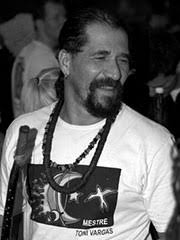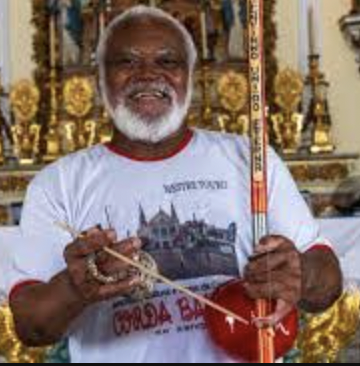
- Lives in: Rio de Janeiro, Brasil
- Date of Birth: 11-Mar-1950
- Learned from: Mestre Celso Pepe
- Capoeira Style: Contemporânea
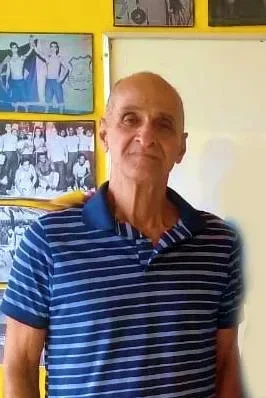
Biography:
Antônio Oliveira Bemvindo, known worldwide as Mestre Touro, was born on March 11, 1950, in Cachoeiro do Itapemirim, Espírito Santo. At the age of six he moved to Rio de Janeiro, where he grew up in the neighborhood of Penha, initially living on the old Rua 3, n° 03, in Vila Cruzeiro. From a very young age, he started working to help support his family - carrying bags at markets, doing freight work and, later, helping the vendor Índio clean cabbages on Saturdays at the Brás de Pina market.
His life became intertwined with capoeira through friendships in the region. He often slept in a market truck in Rua Costa Rica, where he hung out with market traders and friends like Baixinho do Limão and Mr. Raphael. It was with this group that, in October 1957, during the traditional Festa da Penha, he saw a capoeira roda for the first time - an experience that would change his destiny forever.
The next day, he discovered that among his friends there were practitioners, and that one of them, Celso Pepe, taught capoeira in a playful way. Celso Pepe became his first mestre, and the following year Touro was already taking part in the rodas at the Festa da Penha as a capoeirista.
In 1964, he took over the leadership of the Cativeiro de Capoeira Group, which belonged to Mestre Celso Pepe. Shortly afterwards, on April 23, 1964, he founded his own group: the Corda de Bambas Capoeira Group (later known as Corda Bamba), today one of the most traditional in Complexo da Penha. His work spread to various neighborhoods in Rio de Janeiro - Penha, Vista Alegre, Irajá, Parada de Lucas, Cordovil, Vigário Geral, Catete, Bonsucesso, Honório Gurgel and Praça Tiradentes - where he taught classes and trained generations of capoeiristas.
After his military service, he worked for three years as a stevedore (DTM). During this period he met Banzo Africano, who introduced him to Tele-Catha (Cath Can) fighting. His physical talent led him to television when actor José de Arimatéia sponsored him. Mestre Touro took part in several shows and soap operas, including Os Trapalhões, Chico City, Praça da Alegria, Escalada, Memória de Amor, Cambalacho, Escrava Isaura, among other theater, film and TV productions.
Despite his artistic success, his true passion has always been capoeira.
His professional career took a new turn when he was invited by city councillor Carlos de Carvalho to work for the Rio de Janeiro City Council, where he still works today as a legislative assistant, without ever abandoning his mission as a capoeira master.
Mestre Touro's projection went beyond borders. His work has spread to the United States - San Diego, Los Angeles, Dallas, Oakland and Detroit - and also to Spain, in the cities of Castellón and Valencia. In Brazil, he continues to teach in his own backyard, keeping alive the tradition of training young people from the community.
Mestre Touro is recognized not only as the guardian of capoeiragem in Rio de Janeiro, but also as a profound connoisseur of Brazilian history and the social struggles that have shaped capoeira over the decades. His memory, experience and commitment to preserving the rituals and fundamentals of the art have earned him the title of Living Legend of Capoeira Carioca.