Mestre Toni Vargas
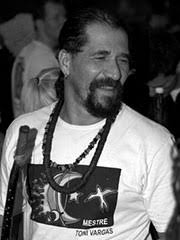
- Lives in: Rio de Janeiro, Brasil
-
Learned from:
Mestre Rony, Mestre Touro, Mestre Peixinho
- Capoeira Style: Contemporânea

Biography:
Antônio Cesar de Vargas, known worldwide as Mestre Toni Vargas, was born in Rio de Janeiro on April 5, 1958. He started capoeira in 1968, at the age of 10, with Mestre Rony from Grupo Palmares de Capoeira, who noticed his talent and took him in even though he couldn't afford to pay for lessons.
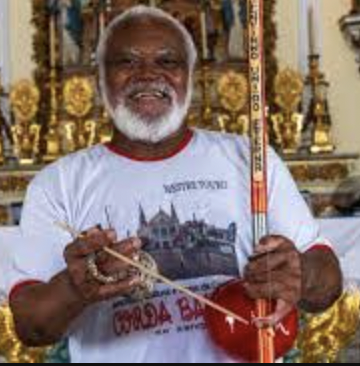
In the 1970s, Toni continued his training with Mestre Touro, from the Corda Bamba Group, in the neighborhood of Penha. In 1977, as a Physical Education student at UFRJ, he met Grupo Senzala and began training directly with Mestre Peixinho, becoming the first student he trained with the red rope in 1985. He was later recognized as a mestre within the Senzala Group, where he remains today.
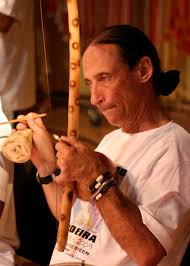
As well as being an outstanding capoeirista, Toni Vargas is one of capoeira's greatest poets, composers and singers, the author of classics sung in rodas all over the world, such as Quando Venho de Luanda, Dona Isabel, Saudade, Era Uma Noite Sem Lua, among many others. His striking voice has become an aesthetic and emotional reference for generations of capoeiristas.
With more than 7 albums recorded, Toni uses music to narrate the history of capoeira, reflect on African ancestry, pay homage to great masters and denounce social issues such as slavery and structural racism.
An educator by nature, he developed the Active Recreation method, which integrates music, movement and dramatization when working with children - an initiative that resulted in the release of a children's album in 2018. In 2017, he published his first book, Fragmentos da Mandinga.
Currently, Mestre Toni coordinates his own school within the Senzala Group, is part of Ilê de Seu Peixinho alongside Mestre Ramos and Mestre Steen, and maintains intense international activity, especially in Europe.
Respected as a master, poet, researcher and voice of capoeira, Toni Vargas is an essential figure in the living memory of the art, recognized for his authenticity, sensitivity and enormous cultural contribution.