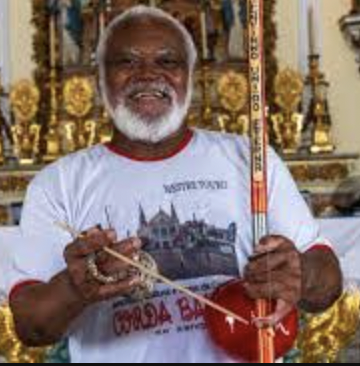
Mestre Celso Pepe
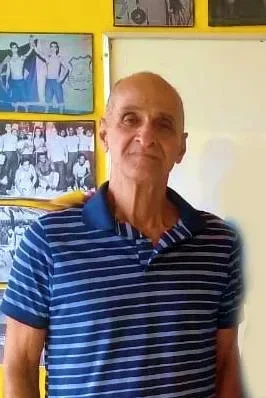
- Lives in: Rio de Janeiro, Brasil
- Date of Birth: 01-Jan-1949
- Learned from: Mestre Djalma Bandeira, Mestre Leopoldina
- Capoeira Style: Contemporânea

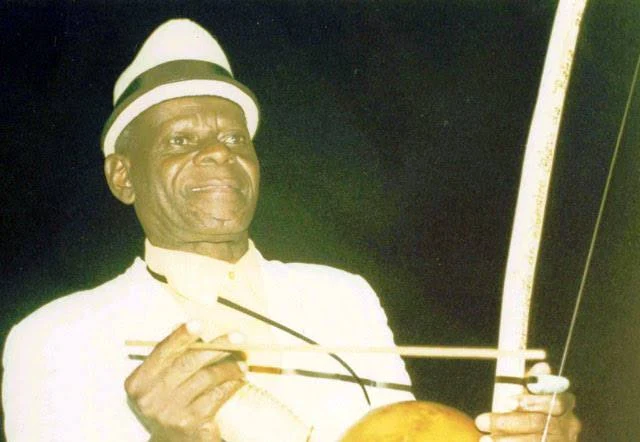
Biography:
Mestre Celso Pepe, born in Rio de Janeiro in 1949, is one of the most important figures in capoeira carioca, known for uniting two distinct lineages of the game - São Bento Grande and Angola - and for training generations of capoeiristas in various neighborhoods in Rio. His career began at an early age and profoundly marked the history of capoeira in the city.
Beginning in Capoeira (1957-1960)
Celso Pepe discovered capoeira in 1957, at the age of eight, in the IAPC housing estate in Olaria. Every Sunday morning he heard the sound of pandeiro and berimbau coming from the community center and, one day, he snuck out of the house to attend a class taught by Mestre Djalma Bandeira. At a very young age, he was turned down, but decided to train on his own, imitating the movements he saw.
During this period, he also began to observe rodas and training sessions with masters such as Artur Emídio and Paraná, as well as the older students of this lineage.
Together with his brother Walter Hugo Pepe and his friend Luiz Garcia Filho (Pelé), they trained hidden behind one of the buildings in the complex, reproducing everything they learned from watching Djalma's classes.
Training with Two Masters
Celso Pepe's career is unique because he trained simultaneously with two great names in capoeira from Rio de Janeiro:
-
Mestre Djalma Bandeira - from whom he learned the São Bento Grande game.
-
Mestre Leopoldina - who taught him the Angola / São Bento Pequeno game.
Celso Pepe was one of Mestre Leopoldina's first students, training with him since the late 1950s, initially under an almond tree in the backyard of the Guanabara Academy.
From 1959-60, he began performing with both Djalma and Leopoldina at events and on television programs.
Television, Exhibitions and Samba
Throughout the 1960s, he took part in:
-
TV programs such as Carlos Imperial (TV Rio) and "Em Guarda" (TV Tupi);
-
caravans of wrestling shows;
-
the first Providência Fair;
-
the first samba school parade with capoeira, in 1961, with Mestre Leopoldina, for Mangueira.
These participations helped publicize capoeira in Rio at a time when it was still discriminated against.
Creation of Grupo Cativeiro (1961) and Grupo Pepe (1973)
In 1961, at the age of 12, Celso Pepe began teaching capoeira to children and teenagers from the Sai Como Pode block in Ramos.
During this period, he created his own style, which he called "capoeira carioca " - a balanced combination of the games learned from Djalma and Leopoldina.
In the same year, he founded Grupo Cativeiro, and in 1973, this group became Grupo Pepe, consolidating his brand and methodology.
That same year, Celso Pepe was awarded the title of Master of Capoeira by the Brazilian Confederation of Pugilism, registration no. 22.
Working in Rio de Janeiro
Mestre Celso Pepe has trained hundreds of students in many different neighborhoods:
-
Penha
-
Ramos
-
Tijuca
-
Copacabana
-
Complexo do Alemão
-
Duque de Caxias (Academia Líder)
-
Imperatriz Leopoldinense
Its presence in diverse social environments - from the South Zone to the suburbs - has produced distinct groups of students, known as:
-
"Pepe's hairy ones " - his students from Penha, including the young Mestre Touro;
-
"Pepe's playboys " - middle-class youths from Copacabana.
Capoeira in Difficult Times
Celso Pepe experienced capoeira at a time of strong discrimination.
He reports being insulted, spat at and even arrested simply for playing capoeira in the street.
His own father strongly criticized him for wanting to make a living from the art, believing that capoeira would not guarantee stability.
When he got married, he started working as a taxi driver, a profession he still has today, but he never abandoned capoeira, teaching it until 2003.
Legacy
Mestre Celso Pepe's career is marked by:
-
Mastery of two classic styles;
-
pioneering role in cultural and television events;
-
fundamental contribution to the consolidation of capoeira in Rio;
-
training important mestres and figures, such as Mestre Touro, among many others.
His capoeira, which he defines as a game "on the top, on the bottom, in the middle, with flexibility and without running away from its origins", has become a reference in capoeira in Rio.
Sources / Credits (as requested)
-
Interviews with M. Celso Pepe and M. Touro
-
Celso Pepe Collection
-
Diário de Notícias (National Hemeroteca)
-
Matthias Röhrig Assunção, September 2020