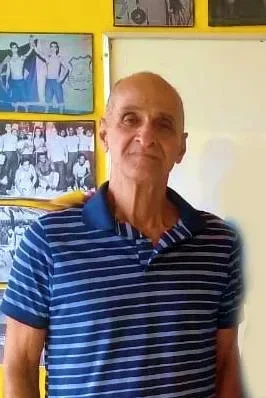
Mestre Djalma Bandeira

- Lived in: Rio de Janeiro, Brasil
- Date of Birth: 31-Mar-1930
- Date of Death: 03-May-2011
- Learned from: Mestre Artur Emídio
- Capoeira Style: Capoeira
Biography:
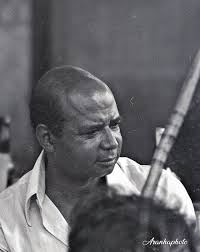
Mestre Djalma Bandeira is one of the most striking - though often little recognized - figures in the history of capoeira in Rio de Janeiro. Active since the mid-1950s, he was largely responsible for consolidating capoeira in the suburbs of Rio de Janeiro, especially in the Olaria and Ramos areas, training generations of capoeiristas who would later become important mestres.
With his firm, musical, disciplined game and deep ties to tradition, Djalma played an essential role in the preservation and transmission of the Carioca style of capoeira.
Beginning in Capoeira and Training
Djalma Bandeira lived in the neighborhood of Olaria, where he began practicing capoeira at a young age. His training is directly linked to the old guard of capoeira in Rio de Janeiro, especially to:
-
Mestre Artur Emídio, his main influence and technical reference
-
Other mestres from the Bahian lineage based in Rio, such as Paraná
Mestre Artur Emídio, a Bahian from Itabuna who settled in Rio in 1955, quickly became a reference on the Rio scene. It was he who passed on to Djalma the strong, expressive and markedly combative style that would characterize the São Bento Grande game in the city.
Artur Emídio's influence on Djalma is widely recognized, and it is through this line that many aspects of Bahian capoeira from the 1930s-1950s arrived in Rio de Janeiro.
The Rodas at the IAPC and the Emergence of a New Generation
Mestre Djalma's classes and rodas took place in the Community Center of the IAPC residential complex in Olaria. There, on Sundays, the pandeiro and berimbau echoed, attracting dozens of young people.
It was in this environment that a boy of just eight, Celso Pepe, saw capoeira for the first time. Although Djalma didn't accept students that young, he became - without knowing it - the first mestre of the future Mestre Celso Pepe, who spent hours watching his classes and secretly imitating the moves with his friends.
Among the young people who trained under his influence, the following stand out:
-
Celso Pepe, who would become master and founder of the Pepe Group
-
Walter Hugo Pepe, his brother
-
Luiz Garcia Filho (Pelé)
Over time, seeing the dedication of these boys, Djalma began to invite them to rodas, trainings and performances.
Public and Television Performance
In the 1950s and 1960s, Mestre Djalma Bandeira helped take capoeira into public spaces and onto television - a huge step at a time when the art still suffered from prejudice.
He took part in programs such as:
-
TV Rio - Carlos Imperial Program
-
TV Tupi - "Em Guarda", dedicated to demonstrations of combat arts
He also took part in rodas, cultural events and presentations throughout Rio's North Zone. His strong presence, his firm game and his musicality helped to project capoeira in a period of great transformation.
Style and Technical Contribution
Mestre Djalma's teaching was known for:
-
Emphasis on the São Bento Grande, fast, direct and powerful
-
A rigid but expressive pedagogy
-
Strong musicality
-
Deep respect for the teachings of the old guard
-
Capoeira as a game, fight, technique and discipline
In this sense, he was a fundamental link between:
Rio's pre-1960s street capoeira
e
The capoeira of the academies and organized groups afterwards
Few mestres have represented this transition as clearly and influentially as Djalma Bandeira.
Influence on Mestre Celso Pepe
Among his most impactful achievements was the training of Mestre Celso Pepe, who learned:
-
São Bento Grande directly from Djalma
-
Angola / São Bento Pequeno with Mestre Leopoldina
This unique combination gave rise to the style that Pepe would later call Capoeira Carioca.
Without Mestre Djalma Bandeira, the history of capoeira in Olaria, Ramos, Penha and the surrounding area would be profoundly different.
Legacy
Although less documented than other great names, Mestre Djalma Bandeira remains an essential figure in the history of capoeira carioca. His legacy lives on through
-
the students he trained
-
the strong, traditional style he passed on
-
the rodas and presentations that marked the era;
-
the bridge he built between tradition and modernity;
-
the perpetuation of São Bento Grande in Rio.
The capoeira that flourishes today in the suburbs of Rio de Janeiro bears, to a large extent, the mark of his work, his discipline and his firm presence.