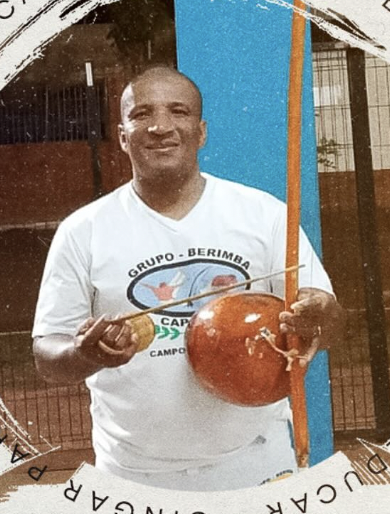
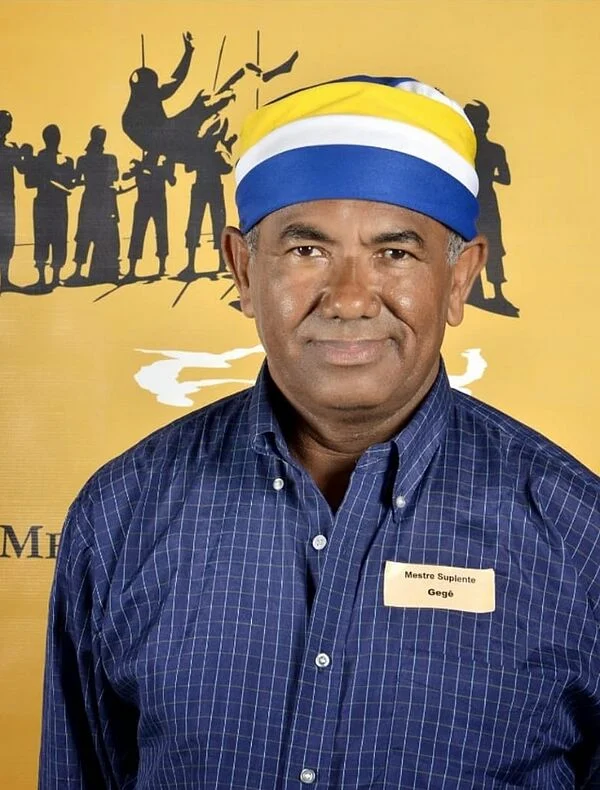
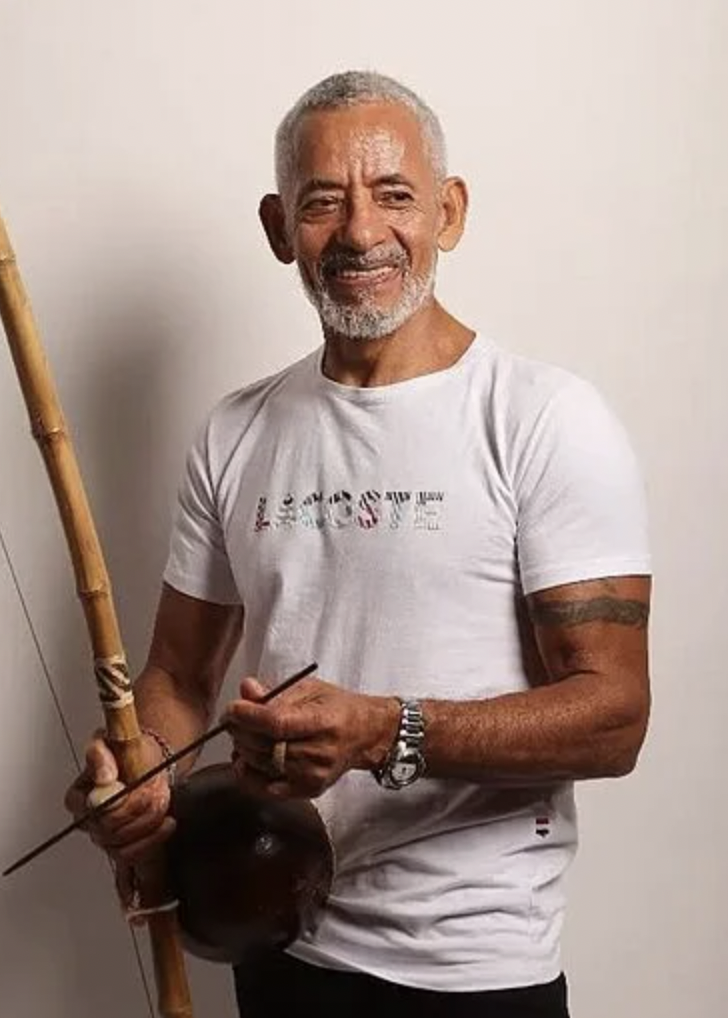
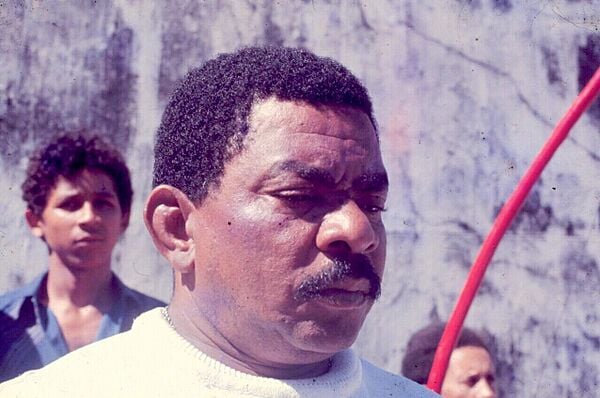
Mestre Fernandinho
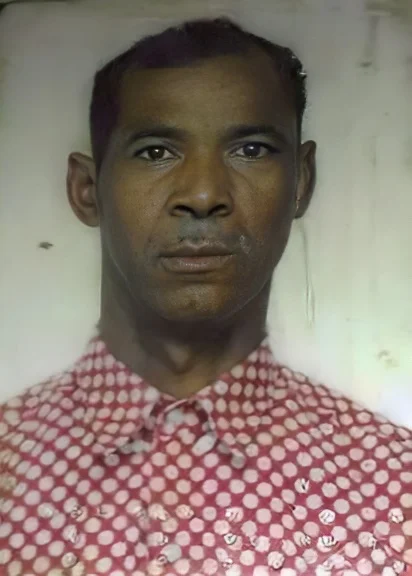
- Lived in: Bahia, Brazil
- Date of Birth: 29-Mar-1948
- Date of Death: 05-May-2001
- Learned from: Mestre Caiçara
- Capoeira Style: Angola
Biography:
Fernando Olímpio Paes Filho, better known as Mestre Fernandinho or Mestre Mano, was born on 26 March 1948 in Salvador, Bahia. He grew up in the well-known Moraes Paes family, which had 19 children, several of whom were active in capoeira. His older brothers, Nilton and Nelson (Cutica/Índio), were among the important early influences that shaped his first steps in the art.
Formation and Lineage
Fernandinho began practicing capoeira with his brother Nilton, but his development took a significant turn when he entered the circle of Mestre Caiçara—oneof the strongest voices of traditional street capoeira in Bahia and a direct heir to the lineage of Mestre Aberrê.
Under Caiçara’s guidance, Fernandinho advanced quickly and eventually became his contra-mestre. He also trained at the Salão do Padre, in the neighborhood of Baixa do Petróleo, an area known historically for territorial disputes between capoeira groups. Fernandinho earned respect early on for his ability to move freely between circles, maintaining good relations with different groups in a period when this was far from common.
Role in Salvador’s Capoeira Scene
Throughout the 1970s and 1980s, Mestre Fernandinho became one of the key carriers of Caiçara’s Angola lineage, preserving both its technical approach and its traditional games. He participated in rodas across the lower city of Salvador, helping maintain a strong Angola presence during a transitional time for capoeira in Bahia.
Expansion to Mato Grosso do Sul
Later, Fernandinho moved to Campo Grande, Mato Grosso do Sul, where he became a central figure in the formation of the local Angola community. His work in the region helped shape a new generation of practitioners.
Among his most notable students are:
-
Mestre Pop, an important leader in the state’s Angola scene
-
Mestre Barnabé, graduated by Fernandinho in 1993
Through them and others, his teachings spread across southern Brazil.
Contribution to the Wider Angola Movement
Mestre Fernandinho belonged to a generation of mestres—alongside Zé Mário, Etevaldo, Alecrim, and Nô—whoplayed a decisive role in taking Bahian Capoeira Angola to other Brazilian states. They preserved elements inherited from older Salvador mestres such as:
-
Zeca do Uruguai
-
Pirrô
-
Gaguinho Preto
-
Nilton and Cutica
His work forms part of the chain that kept this knowledge alive as Angola began gaining national visibility again.
Legacy
Mestre Fernandinho passed away on 5 May 2001, leaving behind a legacy built on dedication to traditional capoeira. He is remembered for:
-
preserving and expanding the lineage of Mestre Caiçara / Aberrê
-
training respected mestres who continued his work
-
bridging capoeira communities in Bahia, São Paulo, Mato Grosso do Sul, and beyond
-
his ability to maintain strong relationships in a complex and often divided capoeira landscape
Though he traveled far from Salvador, his influence remains closely tied to its historic Angola tradition. His students and their groups continue to teach and promote the values he helped preserve.