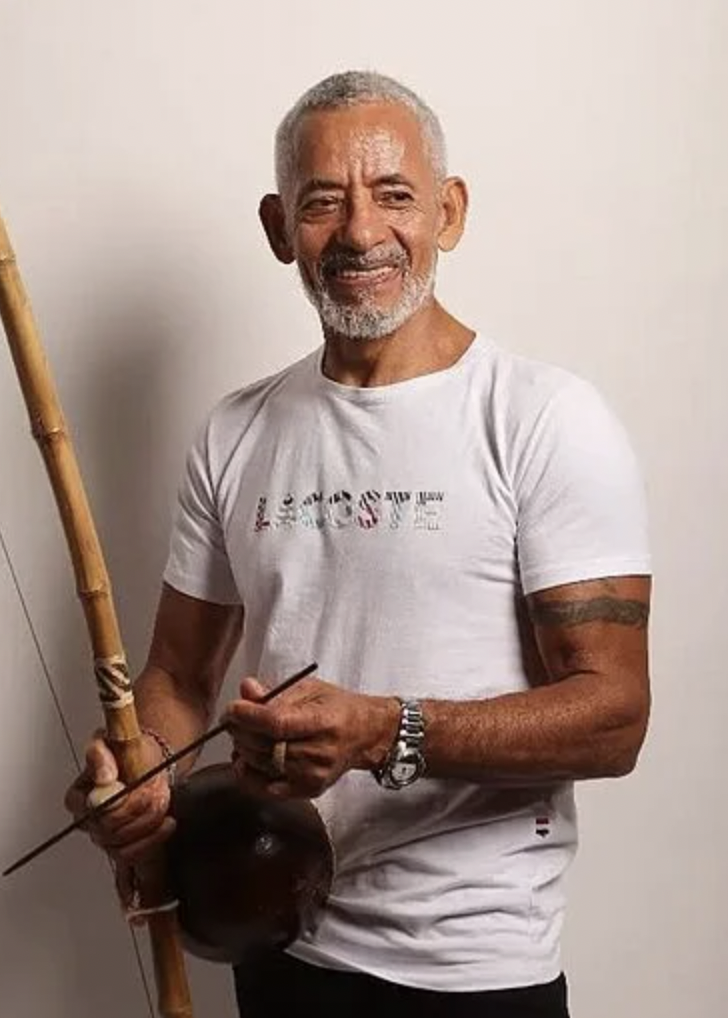
- Lives in: Mato Grosso do Sul, Brazil
- Date of Birth: 19-Mar-1953
- Learned from: Mestre Gato de Sinhá, Mestre Fernandinho
- Capoeira Style: Contemporânea
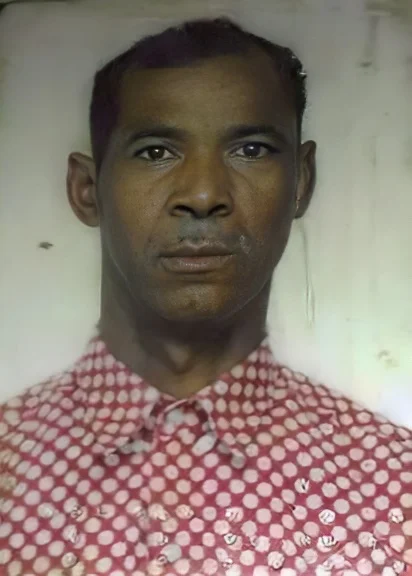
Biography:
Lourival Fernando Alves Leite, widely known as Mestre Pop, was born on 19 March 1953 in Campo Grande, Mato Grosso do Sul, Brazil. He is recognized as one of the pioneers of capoeira in Florianópolis, a respected teacher, and a cultural leader whose work has influenced several generations of practitioners in southern Brazil and abroad.
Early Training and Lineage
Mestre Pop began practicing capoeira in 1974 with Mestre Gato de Sinhá, and soon after with Mestre Fernandinho (Mano), both direct students of Mestre Caiçara and part of the lineage that traces back to Mestre Aberrê, one of the old-guard figures of Bahia’s traditional capoeira.
His initial training reflected the older Bahian style:
-
a low, efficient game
-
strong malícia
-
emphasis on effectiveness rather than rigid style categories
At that time, the practice was simply called capoeira, not yet divided into “Angola” or “Regional.”
Arrival in Florianópolis and Early Work
In 1977, Mestre Pop moved to Florianópolis, Santa Catarina, where he became one of the first people to formally teach capoeira in the state. That same year, he began teaching at the Educandário 25 de Novembro in the Agronômica neighborhood.
His early work is considered the beginning of organized capoeira in Santa Catarina, making him a foundational figure in the region’s capoeira history.
First Legal Capoeira Association in Santa Catarina
In 1979, he founded the Academia Berimbau de Ouro, the first registered capoeira academy in the state, further establishing his role as a pioneer.
Creation of Major Groups
Grupo Nação Capoeira – 1983
Mestre Pop founded Grupo Nação Capoeira, which expanded rapidly into:
-
Rio Grande do Sul
-
Paraná
-
Rio de Janeiro
It became one of the most influential capoeira groups in southern Brazil.
Grupo Aú Capoeira – 1995
In 1995, he founded Grupo Aú Capoeira and the artistic company Zumbaê Brasil.
Through these, he developed cultural shows such as Brasil Encantos Mil, presenting:
-
Capoeira Angola
-
Capoeira Contemporânea
-
Maculelê
-
Samba de roda
-
Afro-Brazilian performance traditions
Grupo Aú Capoeira later transitioned into the Aú Transdisciplinary School of Capoeira, reflecting his evolving approach.
Transdisciplinary Vision of Capoeira
One of Mestre Pop’s defining contributions is his transdisciplinary perspective, shaped by decades of exposure to different capoeira lineages.
Throughout the 1980s and 1990s he explored:
-
Angola (through Mestre Miguel Machado and others)
-
Contemporary / Senzala-influenced styles
-
Traditional Aberrê lineage passed through Fernandinho and Pinóquio
Instead of defending a single tradition, he sought to understand capoeira’s diversity, seeing its different movement vocabularies and philosophies as complementary rather than conflicting.
This approach led him to develop the concept of the Escola de Capoeira Transdisciplinar, where students study multiple historical and contemporary capoeira forms with equal respect.
Social, Cultural, and Educational Impact
Over more than 40 years in Santa Catarina, Mestre Pop has:
-
created numerous community projects
-
led educational programs for children and adolescents from low-income families
-
collaborated with universities and cultural institutions
-
organized events to strengthen the local capoeira community
One of his large-scale initiatives was the Roda dos 1000 Capoeiristas, a gathering that brought together practitioners of various styles and backgrounds, including rodas exclusively for:
-
women
-
children
-
Angola
-
regional/contemporary groups
-
mixed rodas
He also served as Director of Culture of the Confraternity of Santa Catarina Capoeira and contributed to other cultural organizations.
Recent Work
Since 2018, Mestre Pop has been teaching and coordinating cultural activities at his center, the Espaço Transcultural Aruandê in Armação, Florianópolis. His work today extends beyond Brazil, with connections in New Zealand, Malaysia, and other countries.
He remains a respected cultural leader whose influence helped shape the identity of capoeira in southern Brazil and continues to guide new generations.