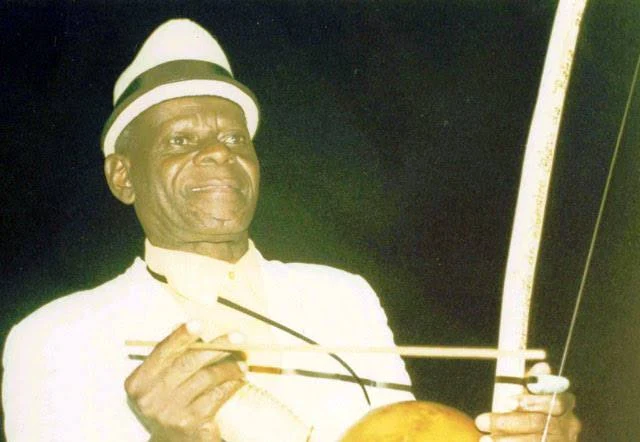
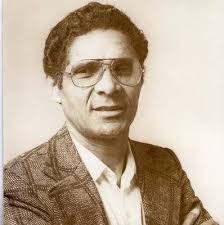
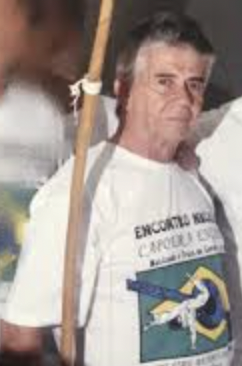
Mestre Artur Emídio
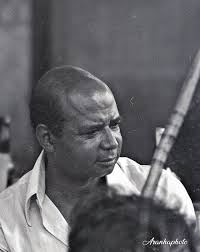
- Lives in: Rio de Janeiro, Brasil
- Learned from: Mestre Paizinho
- Capoeira Style: Mestre Paizinho,

Biography:
Mestre Artur Emídio de Oliveira (1930–2011) stands as one of the most influential and pioneering figures in the history of capoeira in Rio de Janeiro. Born in Itabuna, in the south of Bahia, he began practicing capoeira at the age of seven under the strict and dedicated guidance of Mestre Paizinho (Teodoro Ramos), a mysterious and highly respected capoeirista who trained him in a period when capoeira was still criminalized. Training took place in secrecy—on hills, in alleys, and at night—and discipline was uncompromising. Paizinho would wake the young Artur at dawn to train, instilling in him rigor, resilience, and deep respect for the art.
When Mestre Paizinho died in the mid-1940s, Artur Emídio was only fifteen years old. Despite his youth, he assumed responsibility for teaching Paizinho’s students, effectively becoming an instructor while still an adolescent. His skill and seriousness quickly earned him recognition beyond Itabuna, and even students from Salvador traveled to see the young mestre who was already gaining a reputation for speed, precision, and efficiency.
In the early 1950s, driven by a desire to prove the value of capoeira as a fighting art and national expression, Artur Emídio left Bahia. He first went to São Paulo, where he challenged fighters from different combat disciplines in luta livre and mixed bouts. In 1953, he faced Rudolf Hermanny, a student of Sinhozinho, in a highly publicized fight. Although he lost by knockout, the experience pushed him to broaden his technical knowledge, including studying jiu-jitsu techniques, and hardened his resolve to demonstrate capoeira’s effectiveness.
By the mid-1950s, Artur Emídio settled in Rio de Janeiro, at a time when capoeira in the city was still scarce and largely dominated by the non-musical, highly combative style of Mestre Sinhozinho. Artur Emídio followed a different path. He preserved the musical, ritual, and cultural elements of Bahian capoeira—berimbau, rhythm, malícia, and jogo—while maintaining its effectiveness as a fight. His academy in the northern zone of Rio quickly became a meeting point for capoeiristas from across Brazil and played a decisive role in shaping what would later be known as contemporary (eclectic) capoeira.
His roda was famous and widely attended, attracting both young practitioners and established mestres. Among his most notable students were Mestre Leopoldina, Mestre Djalma Bandeira, Mestre Paulo Gomes, Mestre Mendonça, Mestre Vilela, and Mestre Vilmar, figures who themselves would shape capoeira in Rio and beyond. Through them, Artur Emídio’s influence spread deeply into the fabric of Capoeira Carioca.
Beyond the academy and the ring, Mestre Artur Emídio was a cultural pioneer. In the 1950s and 1960s, he took capoeira to theaters, cinemas, radio, and television, participating in folkloric companies such as the Brasiliana group, the Mercedes Batista Folkloric Ballet, and Solano Trindade’s Teatro Popular Brasileiro. Alongside other Afro-Brazilian artists, he helped transform capoeira, samba, candomblé, maracatu, and frevo from marginalized street practices into celebrated symbols of Brazilian national identity.
He also became one of the earliest ambassadors of capoeira abroad, performing and teaching in countries such as Argentina, Uruguay, France, and the United States, long before capoeira’s global boom. His speed and explosiveness earned him the nickname “O Relâmpago” (The Bolt), a reflection of his dynamic style.
Even after health problems limited his physical practice, Mestre Artur Emídio remained intellectually active, giving lectures, participating in events, and sharing his deep historical knowledge. He passed away on 3 May 2011 in Rio de Janeiro, leaving behind a profound legacy as a mestre, fighter, cultural promoter, and bridge between the old guard of Bahia and the modern development of capoeira in Rio.
Today, Mestre Artur Emídio is remembered as a true precursor of Capoeira Carioca, a man who carried the art from the streets to the ring, from the ring to the stage, and from Brazil to the world.