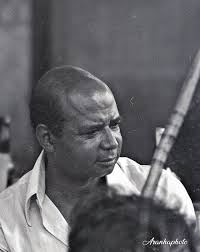
Mestre Paizinho

- Lives in: Itabuna, BA
- Learned from: Mestre Neném
- Capoeira Style: Angola
Biography:
Mestre Paizinho, whose full name was Teodoro Ramos, occupies a fundamental place in the history of capoeira in the south of Bahia, especially in the city of Itabuna. Although shrouded in few written sources and many oral narratives, his importance is undeniable: he was the first mestre of Mestre Artur Emídio, one of the greats responsible for the consolidation of capoeira in Rio de Janeiro in the twentieth century.
A disciple of Mestre Neném, a capoeirista of African origin, Paizinho belonged to a generation formed under the strong direct influence of Afro-Brazilian traditions and a time when capoeira was not taught in academies, but lived on the streets, in the slums and alleys. His learning and practice reflect a period when capoeira was both a cultural expression and a survival strategy.
Mestre Paizinho started teaching Artur Emídio capoeira when he was just seven years old, imposing a strict and disciplined routine. According to Artur Emídio's own accounts, Paizinho used to wake him up at the crack of dawn to train, demonstrating a method that was tough but deeply committed to the formation of the body, courage and character. This early and demanding training definitely marked Artur Emídio's career.
At that time, capoeira was prohibited by law in Brazil, and teaching or practicing it meant taking constant risks. Mestre Paizinho gave classes clandestinely, usually at night, in remote and hard-to-reach places. For this reason, he was arrested several times but, according to reports, always returned to teaching as soon as he was released. This persistence reveals not only bravery, but a deep love for capoeira and the transmission of knowledge.
Mestre Paizinho's death has also become part of the region's popular imagination. According to Mestre Artur Emídio, he died of meningitis, a "morte morrida". However, legendary and even "heroic" versions of his end circulated in Itabuna and Ilhéus, including the famous story that he tried to fly from a coconut tree using palm leaves, in the manner of Icarus. These folklore narratives, true or not, show how much his figure marked the local collective memory.
Mestre Paizinho's importance goes far beyond his little-known name outside Bahia. He was a guardian of capoeira during a period of repression, responsible for keeping alive a tradition that could have been lost. By training Artur Emídio, he passed on a lineage that linked Mestre Neném → Mestre Paizinho → Mestre Artur Emídio, creating a direct link between the capoeira practiced in the interior of Bahia and the capoeira that would later flourish in Rio de Janeiro.
Even without academies, formal titles or official records, Mestre Paizinho remains one of those essential capoeira figures: a master from the time of resistance, whose legacy lives on through the mestres he trained and the stories that continue to be told in the rodas.