Mestre José Carlos
- Lives in: Brazil
- Learned from: Mestre Moraes
- Capoeira Style: Angola
Biography:
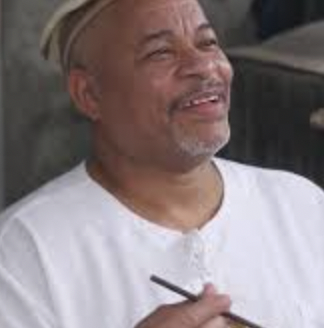
Mestre José Carlos Gonçalves is one of the central figures responsible for the expansion and preservation of Capoeira Angola in Rio de Janeiro. A direct disciple of Mestre Moraes, and spiritually rooted in the lineage of Mestre João Grande and Mestre Pastinha, he later became the founder of the Grupo de Capoeira Angola N’Golo, one of the most historically conscious Angola groups in Brazil.
Early Training and Formation
Mestre José Carlos began training Capoeira Angola in 1973 with the GCAP Mestre Moraes in Rio de Janeiro. Guided by the rigor, discipline, and philosophy that Mestre Moraes transmitted from the teachings of Pastinha, José Carlos quickly developed into one of the most committed students of the group.
On December 16, 1978, during a ceremony at Parque Lage, he was officially recognized by his mestre as Mestre de Capoeira Angola, alongside other iconic names of the Moraes lineage.
GCAP — A Historical Foundation
On October 5, 1980, Mestre José Carlos became one of the co-founders of the Grupo de Capoeira Angola Pelourinho (GCAP), created at the Cosme Velho artisan fair in Rio de Janeiro.
GCAP would go on to become one of the most influential Angola organizations of the late 20th century, serving as a movement of cultural resistance and a unifying force for Angola in Rio.
The founders — Mestre Moraes, Mestre Neco, Mestre Braga, and Mestre José Carlos — established a structure based on African philosophical foundations, discipline, ritual, and respect for Pastinha’s legacy.
The Birth of N’Golo — A Return to the Roots (1991)
In 1991, after years of intense dedication to GCAP, Mestre José Carlos left the organization and founded his own group:
Grupo de Capoeira Angola N’Golo, created on December 10, 1991.
The name “N’golo” — chosen by Dona Rosemery, his late wife — refers to an ancestral ritual from the tribes of southern Angola.
The N’golo ceremony, performed by young men during a zebra courtship ritual, symbolized agility, beauty, skill, and the rite of passage into adulthood.
For enslaved Africans in Brazil, this ritual later evolved into what became known as Capoeira Angola within the senzalas. Thus, adopting the name N’golo symbolizes:
-
a return to African origins,
-
a commitment to ancestral philosophy,
-
and a preservation of the ritualistic and cultural foundations of Capoeira Angola.
Since its creation, the group has carried this identity with pride, integrating historical, theoretical, and ritual aspects into its training.
Challenges, Injury, and Return to the Game
On November 24, 1992, Mestre José Carlos ruptured his Achilles tendon, an injury that removed him temporarily from the roda but not from capoeira.
He underwent surgery on March 4, 1993, and his return to the roda took place on November 16, 1993, at the 1st National Symposium on Capoeira Studies and Debates, held at UERJ.
This moment marked not only his physical recovery but also his symbolic reaffirmation within the Angola community.
Teaching Spaces and Expansion of the N’Golo Group
From the early 1990s onward, Mestre José Carlos worked tirelessly to maintain and expand his group:
-
1994: training resumed in the backyard of his home when there was no formal space available.
-
1995: began teaching at the Irmãos Reis Academy, in Catete.
-
1997: at the invitation of Mestre Braga, the group moved to the UNE building, remaining there until 2002.
-
2003–2005: N’Golo operated inside the Laurinda Santos Lobo Cultural Center, in Santa Teresa.
Over the following years, the group continued to grow and adapt, always prioritizing community presence and cultural education.
Present Day
Today, the Grupo de Capoeira Angola N’Golo conducts practices and rodas at the Mercado das Pulgas, in Santa Teresa, and has active spaces in the neighborhoods of Tijuca and Urca.
There are also plans for the group to resume activities in Fortaleza, Ceará, expanding its regional influence.
The group remains faithful to the core principles of Capoeira Angola:
-
the philosophy of balance and vitality,
-
the historical and theoretical understanding of the art,
-
the ancestral rhythm of the berimbau,
-
and the songs that form the spiritual backbone of the Angola game.
Under Mestre José Carlos’s leadership, N’Golo continues to stand as a symbol of tradition, resistance, and cultural memory.