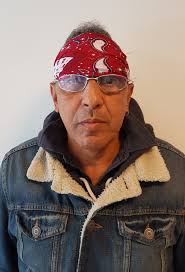
- Lives in: Geneva, Switzerland
- Date of Birth: 13-Jul-1957
- Learned from: Mestre Moraes, Mestre Roni, Mestre Zé Macaco, Mestre Cabelo Vermelho
- Capoeira Style: Angola
Biography:
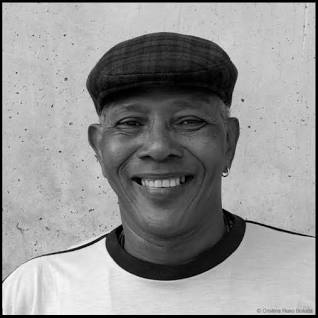
Antonio Neves Braga, known worldwide as Mestre Braga, was born on June 13, 1957, in Rio de Janeiro, Brazil. Today he is recognized as one of the most influential figures in the history of Capoeira Angola, known both for his mastery of the art and his foundational role in creating and expanding two important organizations: the Grupo de Capoeira Angola Pelourinho (GCAP) and, later, Grupo Capoeira Angola Bantu Africa.
Early Life and First Steps in Capoeira
Braga began training capoeira at the age of 14, in the early 1970s, when he joined the Capoeira Regional Palmares Group in Rio de Janeiro. There, he trained under the guidance of respected mestres such as:
-
Mestre Roni
-
Mestre Zé Macaco
-
Mestre Cabelo Vermelho
When the Palmares group dissolved, he continued training with Mestre Touro and Dentinho through Grupo Corda Bamba, further refining his capoeira base.
Meeting Mestre Moraes — The Turning Point
The defining moment in Braga’s trajectory came in 1975, during the Rio de Janeiro carnival. At a roda near Central do Brasil, Braga met Mestre Moraes, who at that time had brought Capoeira Angola from Salvador to Rio de Janeiro—the first Angola school outside Bahia.
Under Moraes’s influence, Braga encountered Capoeira Angola for the first time as a structured philosophical system rooted in the teachings of Mestre Pastinha. Captivated by the art’s depth, ritual, and ancestral meaning, he devoted himself fully to Moraes’s guidance.
On December 16, 1978, Braga was recognized as Mestre of Capoeira Angola, along with his peers Neco and Zé Carlos. The following year, in December 1979, Braga traveled with Moraes to Salvador, Bahia, where they visited Mestre Pastinha, paying homage to the patriarch of Capoeira Angola.
Co-founding GCAP — A Landmark in Capoeira History
In 1980, the Grupo de Capoeira Angola Pelourinho (GCAP) was founded — an organization that would transform the identity and trajectory of Capoeira Angola in Brazil and worldwide.
Although the idea originated with Mestre Neco, it was Mestre Braga who designed one of GCAP’s most recognizable symbols:
the berimbau with two zebras in combat, a visual reference to capoeira’s deep African roots.
GCAP was created at a time when the Brazilian government actively suppressed African cultural expressions. The group became a direct act of cultural resistance, uniting the Angola mestres of Rio de Janeiro:
-
Mestre Moraes
-
Mestre Braga
-
Mestre Neco
-
Mestre Zé Carlos
GCAP quickly rose to national prominence for its organized structure, discipline, and deep commitment to Pastinha’s lineage.
Autonomy and Leadership
In 1982, Mestre Moraes returned to Salvador, leaving the young mestres — Braga, Neco, and Zé Carlos — with full responsibility to continue the school, maintain the quality of the teachings, and preserve the vision of Capoeira Angola in Rio.
Before leaving, Moraes also promoted Marco Aurélio to the rank of mestre, expanding the Angola leadership in Rio.
Founding Bantu Africa and International Expansion
After more than a decade of leadership within GCAP, Mestre Braga departed from the organization in 1994. The following year, in 1995, he founded his own school:
Grupo Capoeira Angola Bantu Africa (ECAAB)
Braga’s vision with Bantu Africa expanded rapidly:
-
1997: After moving to Denmark, he established Bantu Africa groups in Aarhus and Copenhagen.
-
2002: After relocating to Geneva, Switzerland, he founded another branch there — one that remains active to this day.
Through workshops, public rodas, cultural events, and consistent teaching, Mestre Braga helped spread the philosophy, music, and ritual of Capoeira Angola across Europe, influencing generations of practitioners.
Legacy
Mestre Braga is regarded as:
-
one of the key pioneers bringing traditional Capoeira Angola to Rio de Janeiro,
-
a bridge between the teachings of Mestre Moraes and communities abroad,
-
a cultural activist who fought against the suppression of Afro-Brazilian culture,
-
an artist who preserved the symbolism and aesthetics of Angola within his groups.
His work across Brazil, Denmark, and Switzerland ensured that Capoeira Angola would not only survive but thrive outside Bahia, establishing roots in Europe while always maintaining fidelity to the lineage of Mestre Pastinha.