Mestra Jararaca
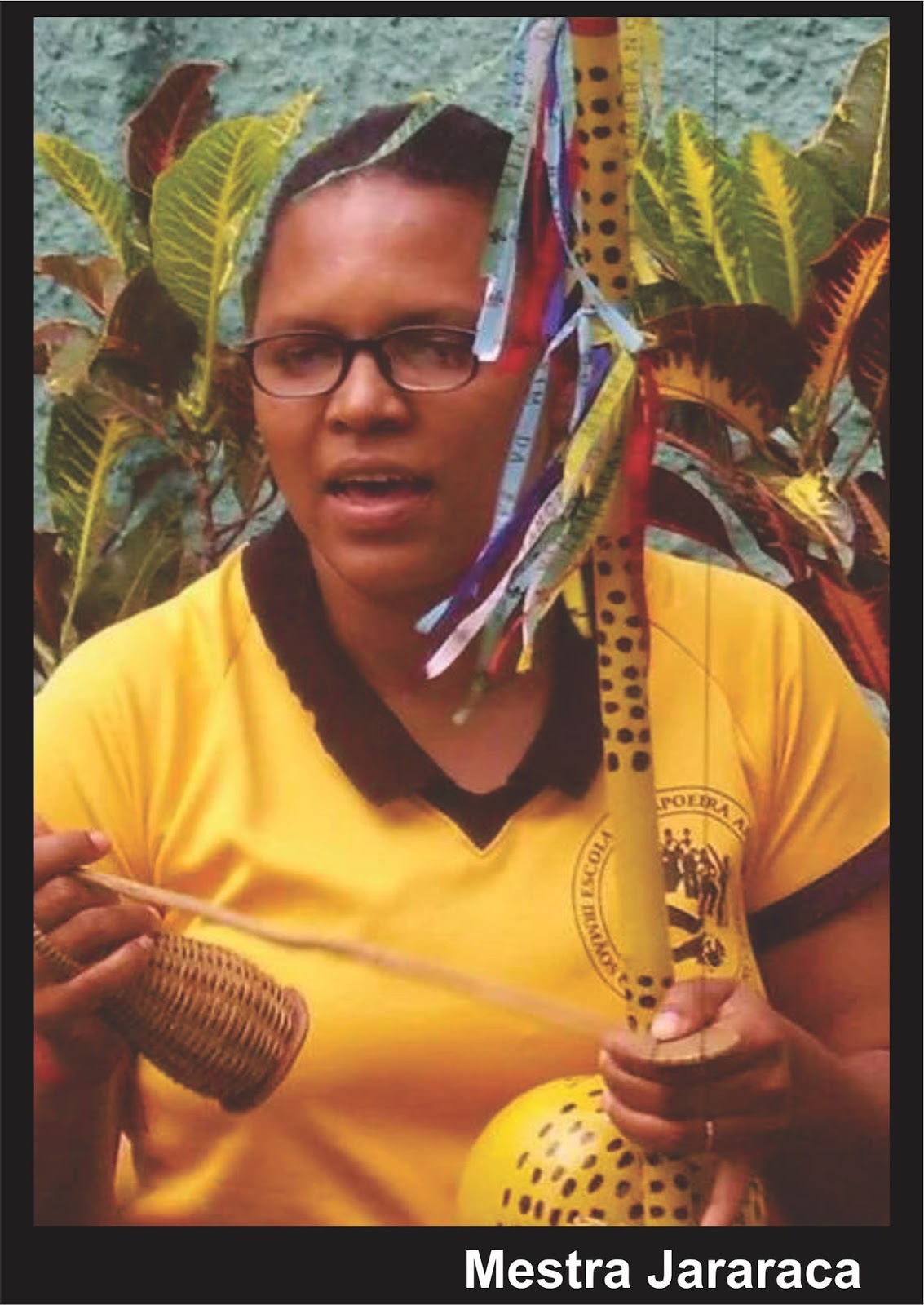
- Lives in: Bahia, Brazil
- Learned from: Mestre Curió
- Capoeira Style: Angola
Biography:
Mestra Jararaca, born Valdelice Santos de Jesus in Bahia, Brazil, is a pioneering figure in the world of Capoeira Angola and a symbol of resilience, talent, and cultural heritage. Recognized as the first female Mestra of Capoeira Angola in Bahia, her story reflects the strength of a woman who challenged expectations, overcame obstacles, and forged her own path in a deeply traditional art form.
Those who once saw a serious young girl with a shy smile playing in the rodas of Mestre João Pequeno in Santo Antônio could never have imagined that she would one day become a master. Even she did not foresee such a destiny. Yet talent, courage, and an unbreakable spirit guided “the little girl who played like a man,” as many used to say.
She began practicing capoeira at the age of 11, often hiding it from her father, who insisted capoeira was “something for boys.” Despite the risk of being reprimanded, she continued attending rodas with her older sister Rita (Ritinha), a dedicated student of João Pequeno. Her training was interrupted when her father forbade her from continuing, and only after his passing in 1989 did she return to the art that had always called to her.
During her time away from capoeira, Valdelice confronted the challenges of life head-on. She began working at a very young age—selling sweets, serving as a nurse, and working as a cleaner. While employed in one house, she asked her employer, the respected spiritual leader Ciandra Mãe, to read a newspaper article to her. Hearing that “those who cannot read are blind to the world,” she returned home determined “not to remain blind.” She pursued her education at the Isaías Alves Institute, all while playing soccer with neighborhood boys in the streets of Santo Antônio do Carmo.
When she returned to capoeira, her rise was swift. She soon became a professora at Mestre João Pequeno’s academy, working alongside major figures such as Mestre Curió and Mestre Moraes. Recognizing her potential and her unique style, Mestre Curió invited her to train under him. “I was already a teacher,” she said, “but when I entered my mestre’s academy, I needed to learn a new game.”
It was during this period that she received the name Jararaca. According to Mestre Curió, all one must do is watch her play to understand the nickname—she moves with the precision, fluidity, and danger of a snake.
Her talent and dedication led her to become a contra-mestra, and in 2008, in a large and traditional roda, she received the title of Mestra, as dictated by the customs of Capoeira Angola.
Today, approaching her forties and raising her two sons, Luiz and José Carlos, she remains deeply involved in Capoeira Angola, working alongside Mestre Curió, himself a student of the legendary Mestre Pastinha. Her journey continues to inspire generations of capoeiristas—especially women—across Brazil and beyond.
When it comes to confronting prejudice, Mestra Jararaca lets her jogo speak for itself.
“I have no patience for people who think that being male, being strong, or having a bit of training makes them superior. Capoeira is a school of every day, that lasts a lifetime and serves both men and women.”
As the first female Mestra of Capoeira Angola in Bahia, she honors those who came before her and opens doors for those who will come after, proving through her life and movement that capoeira belongs to everyone.