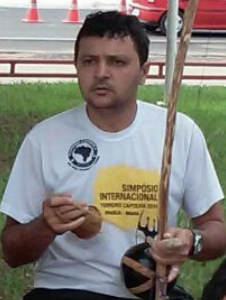
Mestre Squisito
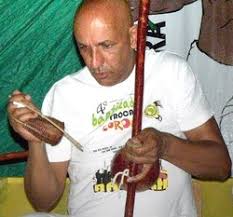
- Lives in: Brasília, Brasil
- Date of Birth: 11-Mar-1953
- Learned from: Mestre Tabosa
- Capoeira Style: Contemporânea
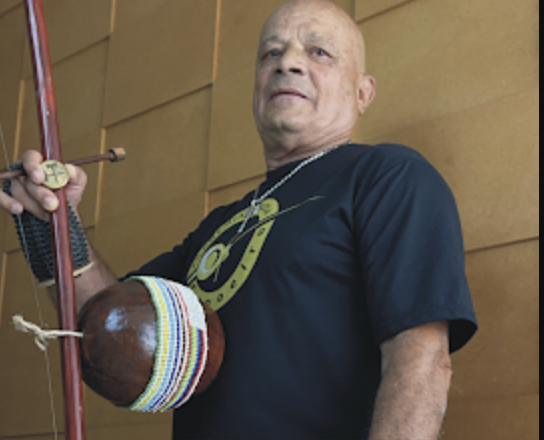
Biography:
Mestre Squisito — born Reginaldo da Silveira Costa on 11 March 1953 in Montes Claros, Minas Gerais, Brazil — is one of the most respected capoeira mestres of his generation. A master, researcher, author, professor, and cultural leader, he is best known as the founder of Cia. da Capoeira Terreiro do Brasil, one of the most influential capoeira institutions in the state of Ceará and later throughout Brazil and abroad.
His contribution integrates traditional capoeira lineage, academic research, cultural activism, and pedagogical innovation, making him a central figure in the development of Capoeira Regional and Capoeira Contemporânea.
Early Life and First Contact with Capoeira
Squisito was born to José Gomes Costa and Iracema de Paula, both from Montes Claros.
His first encounter with capoeira happened in 1968, in the neighborhood of Bonsucesso, Rio de Janeiro, when he met a capoeirista who attended the same school. The encounter sparked his curiosity, but it was not until 1974 that he officially began training.
Academia Tabosa — Beginning of Formal Training (1974)
In 1974, living in Brasília, he enrolled in the famous Academia Tabosa de Capoeira, then one of the most respected academies in Brazil and a gathering place for top capoeiristas and old mestres.
On 6 December 1974, he received his first cord / batizado, with Mestre Tonhão as his padrinho. Known for his humility and discretion, he trained intensely and became deeply loyal to his mestre, Mestre Tabosa, whom he always recognized as the greatest influence in his formation.
He would later write:
“Eu serei sempre parte da sombra de sua grandeza, aprendendo sua humildade e admirando sua competência de capoeirista, Mestre!”
Founder of Grupo Berimbau de Ouro (1975–1978)
Around 1975, he co-founded Grupo Berimbau de Ouro with Mestre Tranqueira (Luiz Lopes Tranqueira), a respected capoeirista from the Senzala lineage.
In this group, Squisito served as:
-
instructor in the mestre’s absence
-
organizer of classes
-
coordinator at SESC 503 Sul
-
administrator of student records, payments, and promotions
Even while working independently, he never broke ties with Mestre Tabosa, maintaining loyalty and continuing his formation.
He earned:
-
Corda Amarela (Formado) in 1976
-
Corda Roxa (Contra-Mestre) in 1978
Move to Ceará & The Birth of Terreiro Capoeira (1978–1982)
Transferred for work at Caixa Econômica Federal, he moved to Fortaleza, Ceará, in 1978.
Before leaving Brasília, he had a dream that inspired the creation of a rustic capoeira space — a “terreiro” with dirt floor and straw roof. From this vision, he founded:
Cia. da Capoeira Terreiro do Brasil
November 1979
His mission:
-
Build a simple, culturally rooted academy
-
Teach high-level capoeira outside the Rio–Brasília axis
-
Establish a unified graduation system
-
Integrate capoeira into official and organized movements
-
Strengthen capoeira as cultural heritage in the Northeast
His impact was immediate. Terreiro do Brasil became the first major capoeira organization in Ceará, and many of today’s leading Ceará capoeiristas trace their lineage to his work.
Return to Brasília & Recognition as Mestre (1982–1987)
In 1982, Squisito returned to Brasília, leaving behind a strong legacy and a network of students and followers in Ceará.
Upon returning, he received the roxo-branco cord (last level before mestre).
He continued to work under the seal FILIADO À ACADEMIA TABOSA until 1987, when he and Bailarino were officially graduated as Mestres by Mestre Tabosa at Ginásio Dom Bosco.
Only after this achievement did Squisito feel ready to lead a group under his own name.
Expansion, International Influence & Philosophy
The seed planted in Ceará grew into a large, respected network.
Today, Cia. da Capoeira Terreiro do Brasil has expanded across Brazil and internationally, known for:
-
peaceful practice philosophy
-
high technical standards
-
cultural and spiritual development
-
social and ecological projects
-
strong educational methodology
Many of his students later became mestres, created their own groups, and continued to follow his philosophy.
Legacy
With more than 30 years of uninterrupted dedication to capoeira, Mestre Squisito stands as one of Brazil’s most complete and influential mestres — combining:
-
Traditional lineage
-
Educational innovation
-
Social activism
-
High-level technical mastery
-
Academic rigor
-
Cultural leadership
His work continues to inspire generations of capoeiristas across Brazil and around the world.