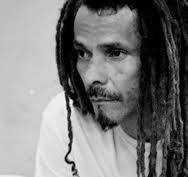
Mestre Rosalvo dos Santos
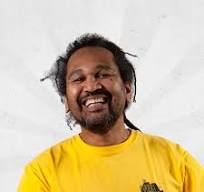
- Lives in: Berlin, Germany
- Learned from: Mestre Cobra Mansa
- Capoeira Style: Angola
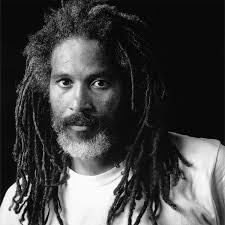
Biography:
Mestre Rosalvo dos Santos was born in Salvador, Bahia, and began playing capoeira at the age of eight, learning on the streets and in the backyards of his neighborhood. By his teenage years, he was already deeply involved in Salvador’s capoeira environment, which in the 1970s remained heavily connected to Afro-Brazilian street traditions.
At 15 years old, Rosalvo met Cobra Mansa (Cobrinha), a student of Mestre Moraes and a key figure in the revival of Capoeira Angola. Training under Cobrinha strengthened Rosalvo’s connection to the Angola lineage of Mestre Pastinha, and soon he joined fellow young capoeiristas Roberval and Laércio to form the group Filhos de Angola. During this period, Rosalvo also taught capoeira at the Museu Afro-Brasileiro and at the Alliance Française Theater School in Salvador.
Training at Forte Santo Antônio (1988)
In the late 1980s, Rosalvo became a regular practitioner at the Forte de Santo Antônio Além do Carmo, a historic fort in Salvador that housed the academies of Mestre João Pequeno and Mestre Moraes.
By 1988, he was training daily at the fort and eventually lived there, fully dedicating himself to Capoeira Angola.
Arrival in Europe (1989)
In 1989, Rosalvo became the first Capoeira Angola practitioner to relocate to Europe with the purpose of teaching the traditional art. At that time, most Europeans were only familiar with capoeira through mixed or Regional-based styles. Rosalvo aimed to introduce the traditional Angola form, emphasizing its history, symbolism, and technical identity.
He was also the first Angoleiro to appear at regional capoeira meetings in Europe, making him one of the earliest bridges between Bahia’s Angola tradition and European practitioners.
Foundation of Capoeira Angola e.V. and Early European Events (1993–1996)
On 1 November 1993, along with Susanne Oesterreicher, Rosalvo co-founded Capoeira Angola e.V. in Berlin.
Only one month later, he organized the first International Capoeira Angola Meeting in Europe, which brought mestres, teachers, and students from Brazil, the U.S., and various European countries. This became the model for similar events across Europe in the following years.
Between 1993 and 1996, Rosalvo regularly held workshops in France, Israel, Sweden, England, and other countries, helping lay the foundation for the first generation of European Angoleiros.
In 1996, during the 2nd International Capoeira Angola Meeting in Washington, D.C., Mestre Cobra Mansa awarded Rosalvo the title of Contramestre, recognizing his work in spreading the art internationally.
Academia Jangada and Expansion in Berlin (1997–2002)
On 19 July 1997, Rosalvo opened Academia Jangada in Berlin—the first Capoeira Angola academy in Europe modeled after the traditional academies of Bahia.
The school grew rapidly, training more than 150 adults, children, and youth. Many of his early students later became instructors teaching in schools, kindergartens, and youth centers across Europe.
In 1998, Academia Jangada organized both the 5th International Capoeira Angola Meeting and the 1st International Afro-Brazilian Dance Meeting, expanding Rosalvo’s influence in the broader Afro-Brazilian cultural scene.
In 1999, Contramestre Rosalvo founded the group Vadiação, strengthening his identity as a leader and lineage carrier in Europe.
In 2002, during the Capoeira Angola Youth Meeting, organized under the European “Jugend für Europa” program, Rosalvo was awarded the title of Mestre de Capoeira Angola by the grandmasters João Grande and João Pequeno—twoof the most historically important figures in Capoeira Angola.
Legacy and Continuing Work
Mestre Rosalvo is regarded as:
-
the first Angoleiro to establish structured Angola teaching in Europe,
-
one of the early transmitters of the Mestre Moraes / Cobra Mansa lineage outside Brazil,
-
a builder of the first stable European Angola community,
-
and a key cultural figure in Berlin’s Afro-Brazilian scene.
Today, he continues teaching at Academia Jangada in Berlin’s Kulturbrauerei, where capoeira remains the core activity despite the academy offering other movement and cultural programs.
Across more than three decades in Europe, Mestre Rosalvo has influenced hundreds of practitioners and contributed to the establishment of Capoeira Angola communities across the continent.