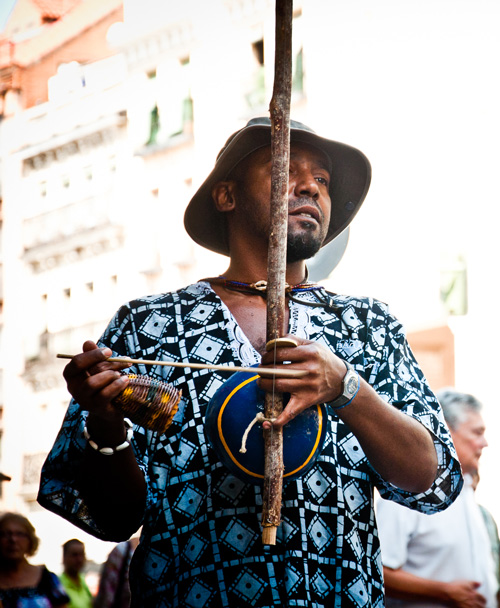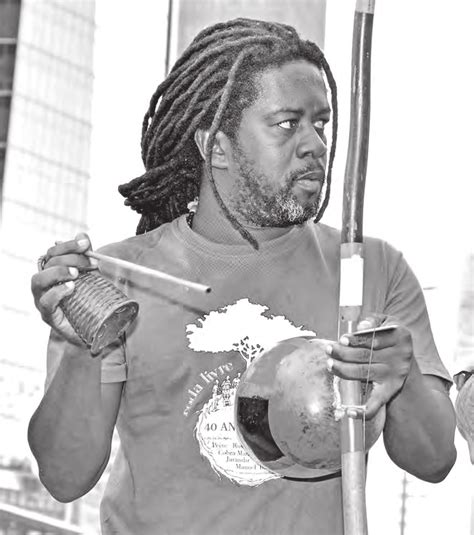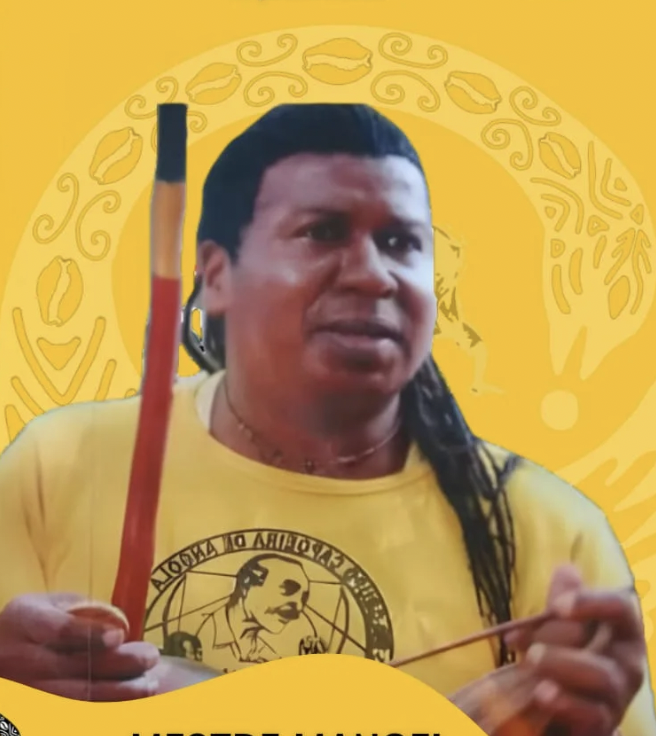
- Lives in: Rio de Janeiro, Brasil
- Learned from: Mestre Jurandir, Mestre Angolinha
- Capoeira Style: Angola
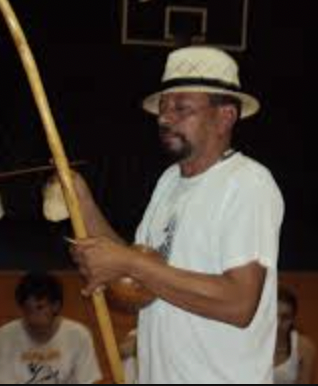
Biography:
Mestre Manoel is one of the key figures in the preservation and revitalization of Capoeira Angola in Rio de Janeiro. With more than five decades dedicated to the art, he has become a reference in both cultural activism and community work, leading projects that uphold the Afro-Brazilian roots, philosophy, and ancestral knowledge of capoeira.
Early Years and Introduction to Capoeira
Mestre Manoel began practicing capoeira in 1970, under the guidance of Mestre Barbosa. At that time, capoeira was spreading rapidly in Rio de Janeiro, and Manoel quickly emerged as a dedicated and disciplined practitioner.
In the early 1980s, he encountered the traditional form of Capoeira Angola through Mestre Jurandir, a member of GCAP–RJ. This meeting transformed the direction of his life. Through Jurandir, Manoel was introduced to the deeper cultural, historical, and philosophical foundations of Angola, inspiring him to become an active defender of ancestral traditions.
When Mestre Jurandir moved to Belo Horizonte at the end of the 1980s, Manoel continued his Angola training with Mestre Angolinha, maintaining his commitment to the preservation of the classical Angola lineage.
Leadership and Influence in Rio de Janeiro
Throughout the 1990s, Mestre Manoel became one of the leading figures of GCAP–RJ and one of the strongest references in the Roda Livre de Caxias. His presence helped shape a generation of practitioners in the greater Rio region.
At the beginning of the 1990s, he also helped establish the traditional Roda de Capoeira Angola da Cinelândia, one of the most important public rodas in the history of Rio de Janeiro.
The roda continues to this day as a symbol of resistance, cultural memory, and the living heartbeat of Angola in the city.
Founding the Group Ypiranga de Pastinha
In 1998, together with his students—including many who would later become mestres, such as Mestra Cristina—MestreManoel founded the Grupo de Capoeira Angola Ypiranga de Pastinha (GCAYP).
The group’s mission is grounded in three pillars:
-
Physical practice and technical mastery
-
Historical and cultural education
-
Valuing and affirming Afro-Brazilian roots
The goal is to form “multipliers”—students capable of using capoeira not only as movement, but as a tool for cultural awareness, social reflection, and community transformation.
Community Work and International Presence
Mestre Manoel has carried Capoeira Angola to different parts of the world, teaching and presenting the art in international festivals and cultural events.
At the same time, he has remained deeply connected to the communities of Rio de Janeiro, especially the Complexo da Maré, where he develops important social projects. Through capoeira, he creates spaces of:
-
empowerment for youth
-
cultural pride
-
identity formation
-
and access to afro-diasporic knowledge
The GCAYP’s work reflects a strong pedagogical and socio-political character, incorporating discussions on Afro-Brazilian history, racism, resistance, and the role of art in social transformation.
Philosophy and Pedagogy
The style practiced by GCAYP follows the lineage of Mestre Pastinha, emphasizing:
-
the connection between game and dance
-
defensive movements
-
the ginga as the foundation of expression
-
flexibility, agility, and deep body control
-
music, ritual, and ancestral symbolism
Students are encouraged to develop their own individual body expression, respecting tradition while finding their personal voice in the roda.
For Mestre Manoel, capoeira is not only a martial art—it is a form of education, resistance, and community building.
Legacy
With more than 50 years dedicated to capoeira, Mestre Manoel stands as:
-
a guardian of Capoeira Angola’s ancestral values
-
a cultural leader in Rio de Janeiro
-
an educator committed to Afro-Brazilian history
-
a founder of one of the most respected Angola groups in the city
-
and an inspiration to generations of mestres and practitioners in Brazil and abroad
His work continues to honor the teachings of Pastinha and the struggle of the African diaspora, keeping Capoeira Angola alive as an art of memory, identity, and transformation.