Mestre Lua Rasta
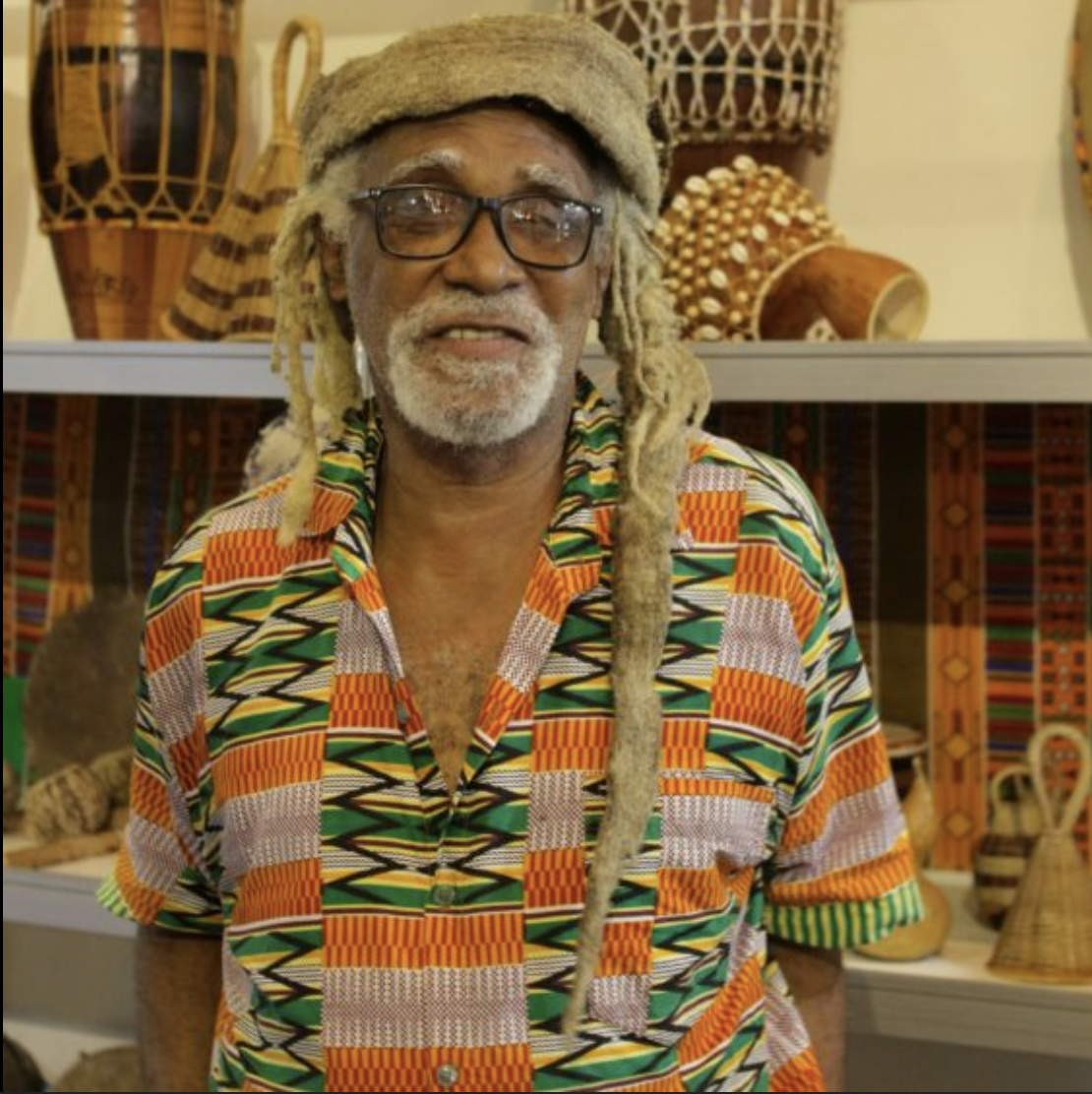
- Lives in: Salvador, Bahia, Brazil
- Date of Birth: 28-Jul-1950
- Learned from: Mestre Bimba, Mestre Canjiquinha
- Capoeira Style: Angola
Biography:
Mestre Lua Rasta, born Gilson Fernandes on July 28, 1950, in Macaúbas, Salvador – Bahia, Brazil, is a renowned Capoeira master, musician, craftsman, and researcher of Afro-Brazilian percussion. His lifelong dedication bridges Capoeira, music, and traditional craftsmanship, preserving and revitalizing Brazil’s rich African cultural heritage.
Lua Rasta began his Capoeira journey in 1968 under the legendary Mestre Bimba, one of the founding figures of modern Capoeira. In 1969, he continued his training with Mestre Canjiquinha, joining the folkloric group Aberré, where he explored the use of Capoeira as a theatrical and expressive art form. His street rodas and collaborations with capoeiristas worldwide helped establish him as a key figure in the artistic evolution of Capoeira.
In 1970, Lua Rasta joined Emília Biancardi’s “Viva Bahia” cultural ensemble, which played a major role in promoting Afro-Brazilian culture globally. Through this experience, he developed a deep passion for Afro-Brazilian percussion instruments, particularly the atabaque, pandeiro, and berimbau. He soon began crafting his own instruments using traditional techniques and high-quality native woods such as sucupira and maçaranduba—apractice he continues to this day.
After moving to Rio de Janeiro in 1975, Mestre Lua Rasta became involved with Grupo Senzala and alternative theater projects, integrating Capoeira and popular performance. From 1981 to 1984, he lived in Europe, spreading Capoeira across multiple countries and deepening his research on African and Asian musical traditions. These travels profoundly shaped his artistry and approach to rhythm and instrument design.
Upon returning to Bahia, he founded the Atelier Percussivo, a workshop and cultural research center dedicated to the study, creation, and preservation of Afro-Brazilian percussion instruments. His work combines artistic mastery with cultural education, influencing musicians, dancers, and capoeiristas around the world.
Since the 1990s, Mestre Lua Rasta has conducted international workshops and lectures on Capoeira and percussion, using art as a vehicle for cultural revitalization and social empowerment. Through his teaching, he emphasizes the recognition of street Capoeira (Capoeira de Rua) as an authentic cultural expression and a symbol of freedom and identity for Afro-Brazilian communities.
Today, Mestre Lua Rasta remains a living example of dedication, creativity, and cultural continuity — a bridge between Capoeira’s ancestral past and its global present.