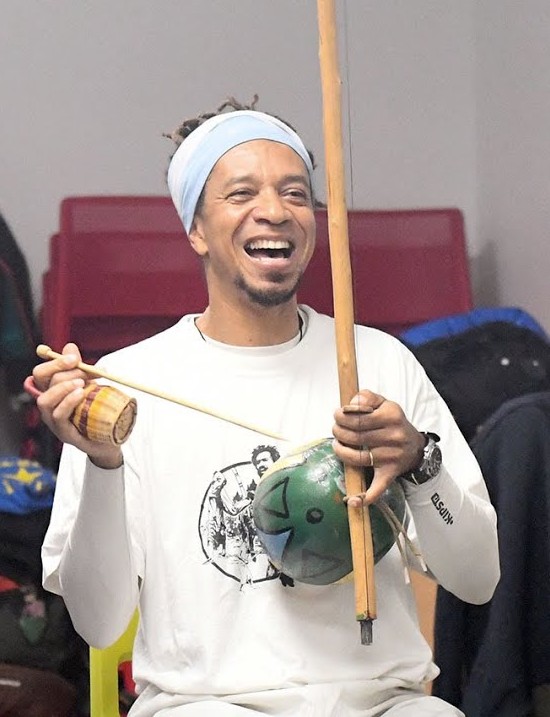
- Lives in: Paris
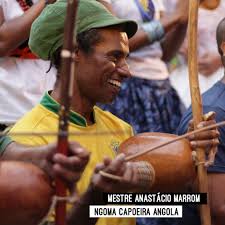
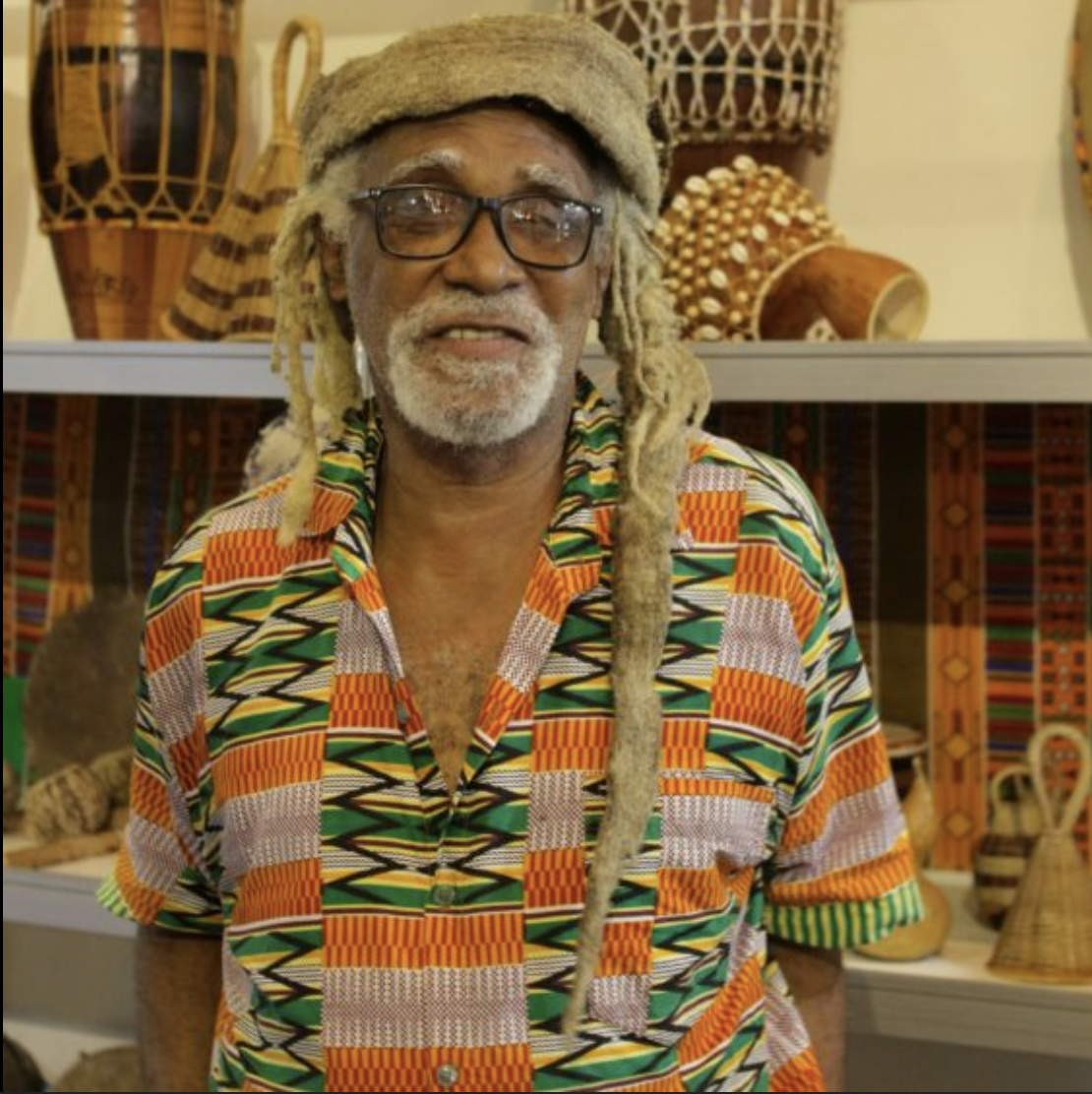
- Learned from: Mestre Anastacio Marrom, mestre Lua Rasta
- Capoeira Style: Angola
Biography:
My story with capoeira began in 1977 at Morro dos Cabritos and in the streets of Rio de Janeiro. I was eight years old. At that time, street rodes were veritable displays of agility and violence, where anything could happen. I was a child, and I already loved capoeira with its dangers and mysteries, perhaps because I am a descendant of slaves, like many Brazilians.
I saw capoeira as a game for street kids, a bit of mischief, a way to escape the favela and reach the asphalt of the Marvelous City. Mestre Lua and his disciples, Sergio Leiteiro, Bebeto Mansueto, João Batista dos Santos, among others, played a fundamental role in my initiation. Alongside these true masters of the art of play, song, and music, I ventured into the rodes and performances organized by Mestre Lua in the streets and markets of Rio de Janeiro. Without even realizing it, I had become a capoeirista, and all my activities became connected, directly or indirectly, to the art of capoeira.
This is how I grew up, between the favela and the asphalt of the big city, between samba and capoeira, whose mythical figures enchant me and remain the subject of my research to this day. The years passed without me ever straying far from this magical world of capoeira. It was then that I had the pleasure of meeting Marrom (1992). Studying the roots of capoeira and its traditions was a well-defined goal in my mind, and Marrom directed his own work toward this end, researching and promoting the history of capoeira masters throughout Brazil.
In 1998, I had the joy of founding the first European branch of the "Angola Marrom Capoeira e Alunos" (NGOMA) capoeira school, based in Paris, which later became the Capoeira Angola School of Paris (ECAP). Today, ECAP cultivates, through traditional capoeira, the full richness of Afro-Brazilian popular culture.