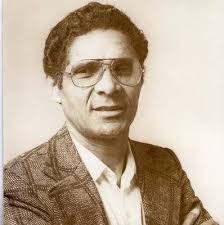
Mestre Paulo Gomes da Cruz
- A vécu à : Sao Paolo, Brasil
- Date de naissance : 25-Jan-1941
- Date de décès : 23-Sep-1998
- Appris de : Mestre Artur Emídio
- Style de Capoeira : Angola
Biographie :
Mestre Paulo Gomes da Cruz, widely known as Mestre Paulo Gomes (also remembered by the apelido Galo Cego), was one of the most influential capoeira masters in the expansion and institutionalization of capoeira in Rio de Janeiro, the Baixada Fluminense, and São Paulo during the second half of the twentieth century.
Born on 25 January 1941 in Itabuna, southern Bahia, Paulo Gomes was part of the great Bahian migration to Rio de Janeiro, a movement driven by economic hardship and the search for opportunity. Like many capoeiristas of his generation, his path into capoeira unfolded far from his birthplace, in the intense urban environment of the carioca suburbs.
In 1962, Paulo Gomes began training at the academy of Mestre Artur Emídio in Bonsucesso, in Rio’s North Zone. There, he trained alongside figures who would later become central names in capoeira history, including Mestre Leopoldina, Mestre Celso do Engenho da Rainha, and Mestre Djalma Bandeira. Within this environment—marked by fast berimbau rhythms, structured sequences, and strong emphasis on effectiveness—Paulo Gomes matured as a capoeirista and earned recognition as a mestre.
Through Artur Emídio, Paulo Gomes inherited a lineage rooted in Bahia and forged under repression: Artur Emídio, disciple of Mestre Paizinho (Teodoro Ramos), who in turn had learned from Mestre Neném. This genealogy firmly situates Paulo Gomes within one of the most important historical branches linking interior Bahia to Rio de Janeiro and, later, to São Paulo.
During the 1960s, Mestre Paulo Gomes moved to the Baixada Fluminense, settling in São João de Meriti, in the neighborhood of Coelho da Rocha. There, he began teaching capoeira and forming students who would themselves become influential mestres. Among his most notable disciples are Mestre Valdir Sales (1942–2019) and Mestre Josias da Silva, both of whom established respected academies and helped consolidate capoeira throughout the Baixada region.
A new chapter opened when Paulo Gomes relocated to São Paulo, where he once again played a foundational role. He created the Centro de Capoeira Ilha de Maré and, in 1985, founded the Associação Brasileira de Capoeira (ABRACAP), one of the most important national organizations dedicated to capoeira. That same year, he served as an advisor to then–Governor Mário Covas, contributing to the creation of State Law nº 4.649, which officially established 3 August as Capoeirista Day in the state of São Paulo.
Beyond teaching and organizing, Mestre Paulo Gomes was deeply committed to the documentation and preservation of capoeira history. In 1982, he published the influential book Capoeira – A Arte Marcial Brasileira, and later contributed musically to projects such as the CD Roda de Capoeira da Ilha de Maré, reinforcing capoeira’s cultural and historical memory.
Tragically, Mestre Paulo Gomes’ life was cut short in 1998, when he was murdered at the age of 57 inside his academy in São Paulo. The violent circumstances of his death shocked the capoeira community nationwide. His wake, held in the academy itself, became a powerful collective farewell, marked by speeches, prayers, berimbaus, songs, and a final roda in his honor, before his burial at Cemitério São Pedro, in São Paulo.
Today, Mestre Paulo Gomes is remembered as a builder of institutions, a transmitter of a vital Rio–Bahia lineage, and a master who helped give capoeira legal recognition, organizational structure, and historical voice. Through his students, writings, recordings, and the communities he founded, his legacy remains firmly embedded in the history of Brazilian capoeira.