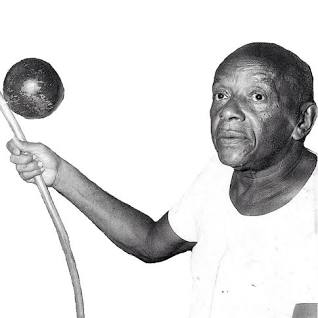
- Reside em: Bahia, Brazil
- Aprendeu com:
- Estilo de Capoeira: Angola
Biografia:
Mestre Bentinho (often referenced as Bentinho Nozinho Bento) is remembered as one of the most important yet least documented figures in the history of Capoeira. Though his name does not appear widely in official records, his influence echoes through the entire lineage of modern Capoeira because he was the first teacher of Mestre Bimba, the creator of Capoeira Regional.
Early Life and Origins
Little is known about Bentinho's personal life.
Historical accounts suggest:
-
He may have been born in Africa, arriving in Bahia during a period when many Afro-descendant sailors, laborers, and stevedores worked along the coast.
-
He reportedly worked as a seaman / ship captain in the Baía de Todos os Santos (Bay of All Saints).
-
The exact dates of his birth and death are unknown, a common reality for many early capoeiristas who lived during a time of limited documentation and heavy social repression.
Capoeira in Bentinho’s Era
Bentinho lived during a period when Capoeira was criminalized, persecuted by police, and practiced mostly in:
-
Street rodas
-
Port areas
-
Festive gatherings
-
Hidden spaces away from authorities
The style he practiced and taught was Capoeira Angola in its folkloric, traditional form—fluid, expressive, playful, and deeply connected to Afro-Brazilian cultural life.
Teacher of Mestre Bimba
Mestre Bentinho’s greatest historical significance lies in being the first mestre to teach Manoel dos Reis Machado, later known as Mestre Bimba.
Under Bentinho, Bimba learned:
-
Traditional Angola movements
-
Balance, malícia, and jogo de dentro
-
Rhythm and ritual
-
The cultural, non-formalized version of Capoeira from before academies existed
This foundation was crucial.
Bimba later blended the knowledge from Bentinho with his experience in Batuque, developing a more structured and combat-effective method—eventually creating Capoeira Regional in the 1930s.
Historical Importance
Even with limited documentation, Bentinho remains a key figure:
-
He represents the transmission of ancestral Capoeira to the generation that formalized the art.
-
He symbolizes the transition from street tradition to organized teaching.
-
Without his early instruction, the development of Capoeira Regional—and its survival into modern times—might have been very different.
Legacy
Though nearly invisible in official history, Mestre Bentinho’s influence lives through:
-
The lineage of Mestre Bimba
-
The evolution of Capoeira Regional
-
The preservation of pre-academy Capoeira traditions
He is a reminder that Capoeira’s history is built not only by famous names, but also by quiet masters whose teachings shaped the giants that came after them.