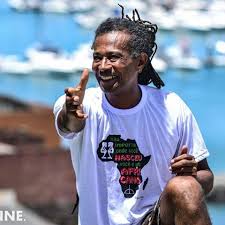
- Lives in: Salvador, Bahia, Brazil
- Date of Birth: 08-Jul-1959
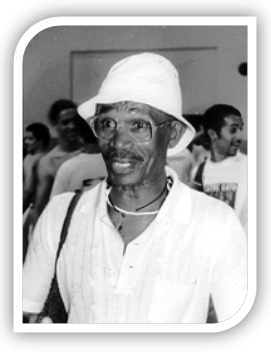
- Learned from: Mestre Paulo dos Anjos
- Capoeira Style: Angola
Biography:
Mestre Renê Bitencourt, born on July 8, 1959, in Teodoro Sampaio, near Feira de Santana, Bahia, is one of the foremost figures in the preservation and political articulation of Capoeira Angola in modern times. A devoted disciple of Mestre Paulo dos Anjos — and therefore heir to the lineage of Mestre Canjiquinha and Mestre Aberrê — Renê emerged in the 1980s and 1990s as a unifying force for Angola practitioners across Bahia and Brazil.
Deeply rooted in tradition yet visionary in approach, Mestre Renê helped shape the political and cultural organization of Capoeira Angola during a pivotal period. He was one of the key organizers of the historic Encontros Mestre Paulo dos Anjos in Mar Grande, Ilha de Itaparica, which gathered some of the most respected mestres of Bahia’s old guard. He also co-founded and led initiatives like Capoeira Solidária, a social movement in Salvador dedicated to using Capoeira as a tool for education, inclusion, and cultural awareness.
On March 11, 1986, Mestre Renê founded ACANNE (Associação de Capoeira Angola Navio Negreiro) in Salvador, Bahia, with the support of José Currello and Osma Luducive’s brothers. ACANNE was conceived as a bastion for the preservation and diffusion of Capoeira Angola, honoring its Afro-Brazilian roots that combine movement, rhythm, and resistance. Under Renê’s leadership, the association became a key reference point for teaching, research, and social outreach, offering classes, workshops, and community events that kept Capoeira’s ancestral legacy alive.
Between 1987 and 1993, ACANNE produced a weekly Capoeira column in the newspaper A Tarde, publicizing local and national events, while also documenting the voices of elder mestres. In 1987, Mestre Renê played a pivotal role in founding the Associação Brasileira de Capoeira Angola (ABCA), which united traditional teachers under one national umbrella. From the 1990s onward, he organized the legendary Meetings of the Guardians of Capoeira Angola in Bahia, events that brought together generations of Angola practitioners and helped solidify Bahia’s reputation as the spiritual home of Capoeira.
In the 2000s, ACANNE moved its headquarters to Largo 2 de Julho, while maintaining a strong base in Fazenda Grande, where it continues to run art education programs for children and youth. Today, ACANNE’s influence extends far beyond Brazil, with centers in Porto Alegre, Erexim, and Passo Fundo (RS); Poços de Caldas (MG); Tunapuna (Trinidad and Tobago); Phoenix (Arizona, USA); and Paris (France).
Among its most celebrated annual events are “Pra Contar Certo Tem Que Ver de Perto” — an international gathering held every July that invites capoeiristas from around the world to experience the culture of Bahia firsthand — and “O Sabor do Saber Ancestral”, a November celebration rooted in feijoada rituals and dedicated to honoring African ancestry and spiritual continuity.
As a musician and composer, Mestre Renê is admired for his profound artistry — blending rhythmic precision with emotional depth. His music embodies the spiritual essence and poetic wisdom of Capoeira Angola, inviting listeners on a journey through heritage, creativity, and rhythm. His voice, like his teaching, is both a call to memory and a song of transformation.
Through his tireless dedication, Mestre Renê Bitencourt continues to stand as one of the most influential guardians of Capoeira Angola — a bridge between the past and the future, ensuring that the movement, music, and meaning of this art form endure across generations and continents.