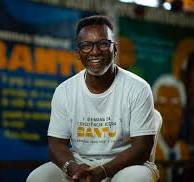
- Lives in: Ilha de Itaparica, Bahia, Brasil
- Date of Birth: 01-Nov-1969
- Learned from: Mestre Virgílio da Fazenda Grande
- Capoeira Style: Angola
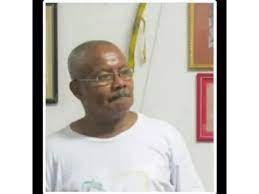
Biography:
Edielson da Silva Miranda, widely known as Mestre Roxinho, was born on November 1, 1969, in Vera Cruz, on Ilha de Itaparica, Bahia, Brazil. His life story is deeply marked by resilience, social commitment, and a lifelong dedication to Capoeira Angola as both a cultural practice and a tool for social transformation.
Raised in a context of severe economic hardship, Roxinho began working at a very young age, selling homemade treats and helping care for his younger siblings alongside his mother. Seeking better opportunities, the family moved to Salvador, where he continued to work on the streets and take on family responsibilities while living in precarious conditions. His first encounters with capoeira date back to 1976, when his grandfather took him to the Praça do Duro, a traditional gathering place for capoeira rodas led by figures such as Mestre Gerson Quadrado and Mestre Paulo dos Anjos.
As life became increasingly difficult, Roxinho spent a period living on the streets of Salvador, an experience that profoundly shaped his understanding of marginalization and survival. Later, while living with his older brother and selling coffee in the streets, he met Mestre Virgílio da Fazenda Grande. This encounter proved decisive: Mestre Virgílio not only taught him Capoeira Angola at the Academia de Capoeira Angola 1º de Maio, but also introduced him to the trade of metalworking and offered him shelter. From 1982 onward, Roxinho lived in his mestre’s home, where Virgílio became both a paternal figure and a central reference in his capoeira formation, influencing his future commitment to generosity and social work.
Throughout the 1990s, Mestre Roxinho began teaching capoeira, focusing especially on children and elders, often free of charge. In 1998, he founded a social initiative originally called Projeto Erê – Menino Vem Gingar, which later became known as Projeto Bantu. In 1999, he established the Escola de Capoeira Angola Mato Rasteiro (ECAMAR) in Salvador. His work increasingly emphasized education, identity, and social inclusion through Capoeira Angola.
After relocating to Lins, São Paulo, he dedicated himself fully to teaching and developing his projects. In 2002, Mestre Virgílio formally granted him the title of Mestre. In 2006, Mestre Roxinho moved to Sydney, Australia, where he founded ECAMAR Australia, becoming the first Mestre of Capoeira Angola from Bahia to establish a school of this tradition in the country. From there, Projeto Bantu expanded internationally and today operates as an NGO in Brazil, Australia, and the Asia–Pacific region. A major milestone of this work is the ongoing construction of a cultural center for Projeto Bantu on Ilha de Itaparica.
In addition to his teaching and social initiatives, Mestre Roxinho is the author of the book Ginga de Resiliência: Capoeira Angola para além da Roda (2023), presented at the Festival Literário da Bahia (FLIPAR) in 2024. That same year, the Instituto Cultural Bantu received the Prêmio LED from TV Globo, awarded by popular vote in the category of Entrepreneurs and Organizations, recognizing the project’s social impact.
Beyond capoeira, Mestre Roxinho is also an Ogã confirmado of Ilê Axé Opô Ajagunã, a historically protected Candomblé terreiro in Areia Branca, Lauro de Freitas, reinforcing the deep spiritual and cultural foundations that inform his life’s work.
Through decades of dedication, Mestre Roxinho has become an important contemporary figure in Capoeira Angola, known not only for his mastery of the art, but also for his unwavering commitment to education, community empowerment, and cultural continuity across continents.