Mestre Suassuna
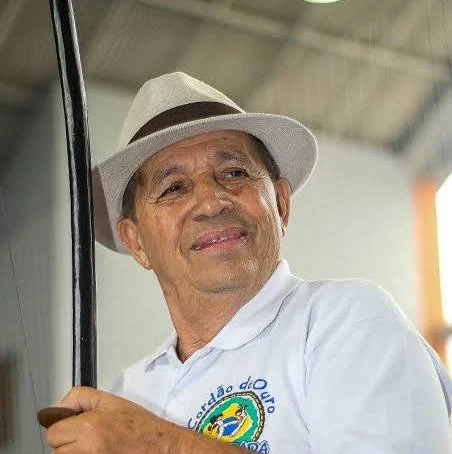
- Lives in: Ilhéus, Bahia, Brazil
- Date of Birth: 04-Jul-1938
-
Learned from:
Mestre Sururú, Mestre Bigode de Arame, Mestre Tonho Rale
- Capoeira Style: Contemporânea

Biography:
Reinaldo Ramos Suassuna, universally known as Mestre Suassuna, is one of the most influential figures in modern capoeira and the founder of the international group Cordão de Ouro. Born in 1938 in Ilhéus, Bahia, and raised in Itabuna, Suassuna’s path into capoeira was shaped early by circumstance and determination.
As a child, he suffered a physical limitation in his legs, and on medical advice he was encouraged to practice a physical activity other than football. Through friends and local rodas, he discovered capoeira in the early 1950s, beginning his training with respected regional capoeiristas such as Mestre Sururú, Bigode de Arame (Arame), and Tonho Rale. At a time when formal academies were rare outside Salvador, Suassuna learned by circulating through rodas, absorbing technique, rhythm, and malícia directly from experienced players.
Seeking broader knowledge, he traveled frequently to Salvador, where he encountered the great masters of the era. While he considered many capoeiristas he met as “mestres,” Pastinha and Bimba stood out as foundational references, alongside Canjiquinha and Waldemar. Rather than aligning strictly with one school, Suassuna embraced capoeira as a whole—Angola and Regional—extracting what he felt was strongest from each tradition.
In 1965, Suassuna moved to São Paulo, answering invitations to present capoeira and determined to build a future through the art. The beginning was difficult: he worked multiple jobs and faced discrimination against capoeira in the city. Through persistence, he met Mestre Brasília, and together they laid the groundwork for a new movement.
On 1 September 1967, Suassuna and Brasília founded the Grupo Cordão de Ouro. From its earliest days, Cordão de Ouro emphasized creativity, discipline, openness, and collective growth. The group quickly became a hub where capoeiristas trained intensely, socialized, and were encouraged to eventually open their own academies—an approach that helped spread capoeira rapidly across São Paulo and beyond.
Mestre Suassuna is especially renowned for creating Miudinho, a close-range, dynamic game inspired by the Jogo de Dentro of Capoeira Angola, but adapted to contemporary rodas. Miudinho became one of his most important technical and pedagogical contributions, influencing generations of players worldwide.
In addition to teaching, Suassuna is a prolific composer of capoeira songs, many of which have become staples of rodas internationally. He also led stage shows, recorded albums, organized seminars, and represented capoeira in universities and cultural institutions across Brazil and abroad.
Today, Cordão de Ouro is among the oldest, largest, and most influential capoeira groups in the world, with branches on every continent. Mestre Suassuna is widely respected not only as a master technician and musician, but as a visionary who helped bridge traditions, styles, and generations, insisting that capoeira “belongs to everyone” and should remain a space of encounter, creativity, and shared identity.
Through his teachings, music, and organizational legacy, Mestre Suassuna remains a central figure in the global history of capoeira.