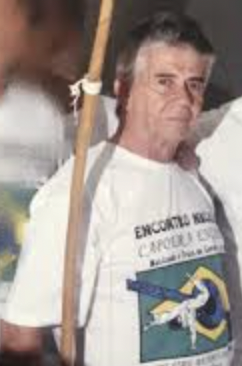
- Viveu em: Rio de Janeiro, Brasil
- Data de nascimento: 16-Jul-1931
- Data de falecimento: 01-Jan-2017
- Aprendeu com: Mestre Artur Emídio
- Estilo de Capoeira: Angola
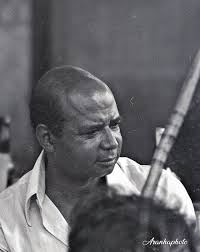
Biografia:
Damionor Ribeiro de Mendonça, known in capoeira as Mestre Mendonça, was one of the most influential figures in the institutionalization and regulation of capoeira in Brazil. While not as widely remembered for street rodas or spectacle, his impact was decisive in shaping capoeira’s transformation into a recognized sport with formal structures, rules, and graduations.
Born on 16 July 1931 in Aracaju, capital of the state of Sergipe, Mendonça was the son of an army general, a background that would later influence his disciplined and organizational approach to capoeira. In the 1950s, he moved to Rio de Janeiro, settling in the neighborhood of Grajaú, in the city’s North Zone.
Mendonça’s entry into capoeira came relatively late compared to many mestres of his generation. In 1964, while working in the security services of Banco do Brasil, he and colleagues sought a fighting art that could enhance their professional skills. Capoeira, with its combination of combat, agility, and strategy, appeared as the ideal choice. Mendonça chose to train under Mestre Artur Emídio, one of the leading capoeira masters in Rio at the time. According to Mestre Bebeto, he also trained with the Grupo Bonfim, which was then expanding its activities in Rio’s northern suburbs.
By the 1970s, Mestre Mendonça was already teaching his own classes, notably at the Clube Satélite do Banco do Brasil, demonstrating how capoeira was entering institutional and corporate spaces beyond traditional academies and streets.
More than a practitioner, Mestre Mendonça quickly became a political and organizational actor within capoeira. From 1967 onwards, he dedicated himself to the creation of a regulatory framework for capoeira, which he firmly conceived as a sport. His efforts culminated during the Second Symposium on Capoeira (1969), where representatives from different Brazilian states were selected to draft a national regulatory proposal. Mendonça was chosen to represent Rio de Janeiro (then the state of Guanabara).
He assumed responsibility for drafting what would become the “Technical Regulation of Capoeira”, officially adopted in 1973 by the governing sports authorities linked at the time to the Brazilian Confederation of Pugilism. This document established standardized rules for competitions and practice and became a cornerstone for sport-oriented capoeira.
One of Mestre Mendonça’s most lasting contributions was the creation of the official graduation system. Inspired by the colors of the Brazilian flag, he introduced a hierarchy using green, yellow, blue, and white, culminating in the white belt for the master category. At a time when there was no standardized attire, he also helped define the white uniform as official, drawing inspiration from the festive white clothing traditionally worn by old capoeiras in Bahia.
Mestre Mendonça remained highly active within the Masters’ Committee of the Rio State Federation of Pugilism and later within the Brazilian Confederation of Capoeira, continuing his work well into old age. Alongside his administrative efforts, he was also a student of capoeira history and culture, composing songs that are still sung in rodas today.
Because of his tireless dedication to the sportive and institutional recognition of capoeira, he received several honors, including the title of Honorary Citizen of Rio de Janeiro, awarded by the City Council.
Mestre Mendonça passed away in 2017, leaving behind a complex and influential legacy. He is remembered as the architect of capoeira’s technical regulations, the creator of its official graduation system, and one of the key figures responsible for capoeira’s acceptance within Brazil’s formal sports and institutional frameworks.