- Reside em: Brazil
- Aprendeu com: Mestre Cobrinha Verde
- Estilo de Capoeira: Angola
Biografia:
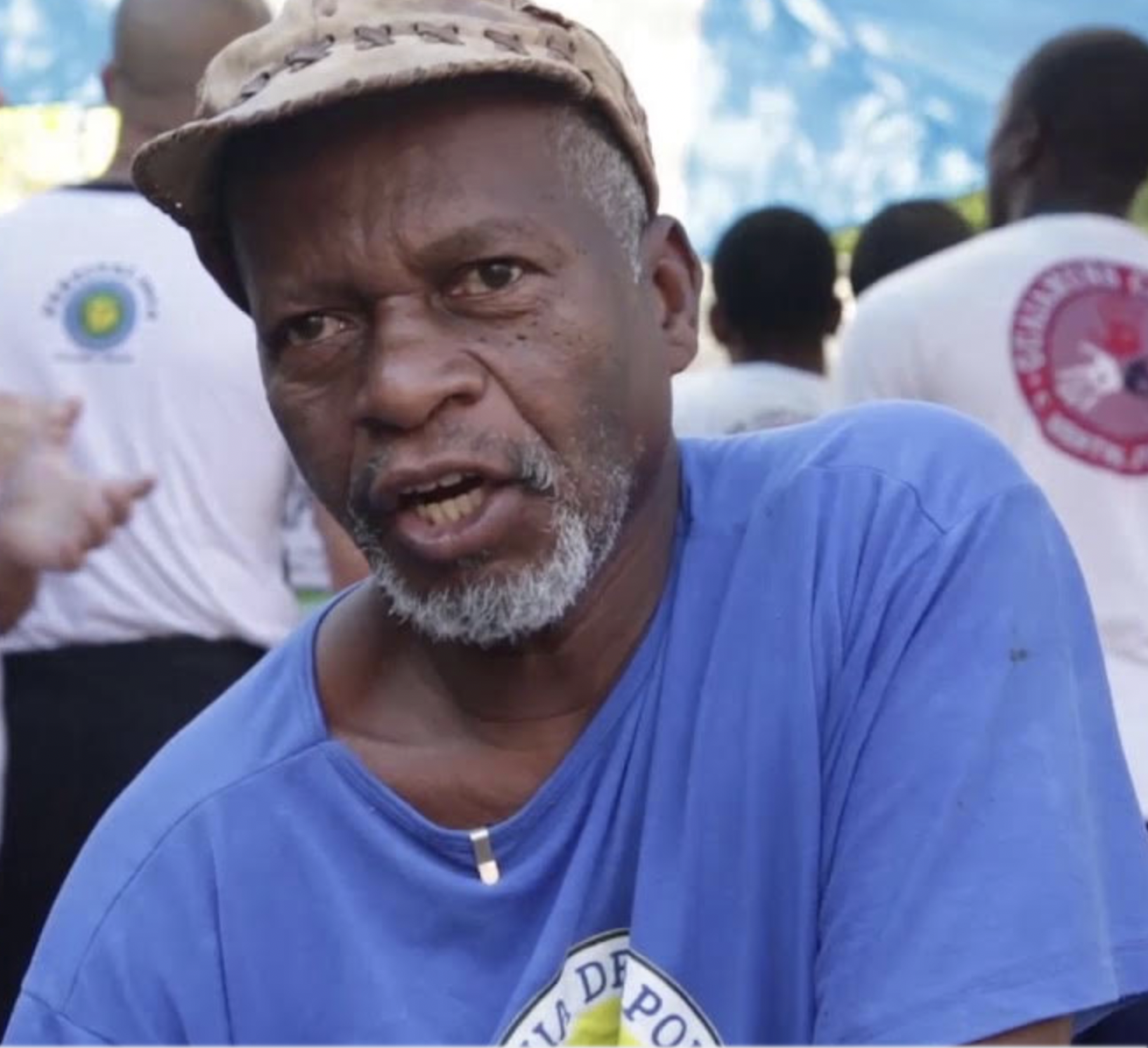
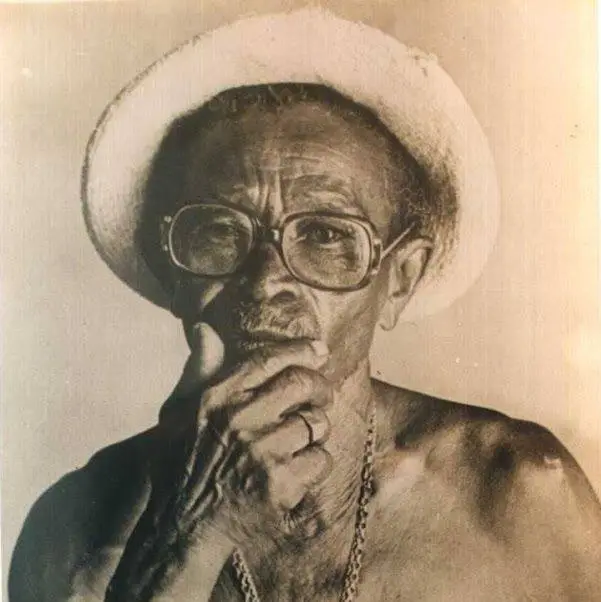
Roque Mendes dos Santos (Mestre Roque)
Roque Mendes dos Santos (Mestre Roque) was born in 1938 in Salvador. He was the son of the well-known capoeirista Liberato Francisco Xavier (better known as Chico Preto), who had a fish stall in the famous Mercado Modelo market. Roque began learning capoeira as a boy, in 1948, from his father’s friend, a tailor who lived in Alto do Peru, near Largo do Tanque. According to his own account, he associated with many well-known capoeiristas—Gajé, Índio, Tatu Bola, Bom Cabrito, Boca de Fumaça, Traíra, and Canjiquinha. He says he also learned a great deal from Cobrinha Verde.
Roque enlisted in the navy and arrived in Rio de Janeiro in 1956. After serving, he remained in Rio. He mostly lived in the Pavão-Pavãozinho morro, in the south zone between Ipanema and Copacabana. He started teaching capoeira, at first in Catumbi, and then at the Residents’ Association of Pavão-Pavãozinho.
In 1960, he founded the capoeira group Filhos de Angola. He was a pioneer in teaching capoeira in the south zone of Rio de Janeiro. His group participated in tournaments and competitions that helped promote capoeira, such as the well-known Berimbau de Ouro tournament (1967).
Roque states that he learned to play berimbau from Mucungê, another migrant from Bahia who had a reputation as an excellent musician. He played berimbau in the play Pagador de Promessas (by Dias Gomes), when it was staged in Rio de Janeiro. His capoeira group Filhos de Angola participated in the folkloric show Uma Noite na Bahia, which was inspired by street festivities in Salvador. He performed in clubs, samba schools, and in the carnival bloco Império do Pavão. Mestre Roque also worked with the folkloric group Capoeiras do Bonfim, led by Mestre Mário Santos (Mário Buscapé). Roque trained several capoeira masters, such as Adilson, Poeira, Derli, Lapinha, Paulo Siqueira, and Sandrinha. Sandrinha was one of the first women to train capoeira in Rio de Janeiro (and in Brazil more broadly).
Roque states that his capoeira is faster and based on the São Bento rhythm. He also had contact with Bimba’s student Vermelho 27 and claims he was one of the first to introduce the cordel (graduation cord). Mestre Roque is considered one of the founders of contemporary capoeira in Rio de Janeiro.