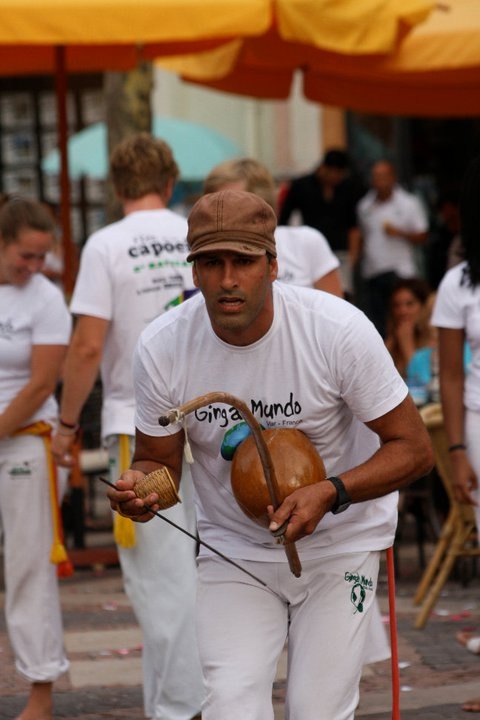
- Lives in: Barcelona, Spain
- Learned from: Mestre Camisa
- Capoeira Style: Contemporânea
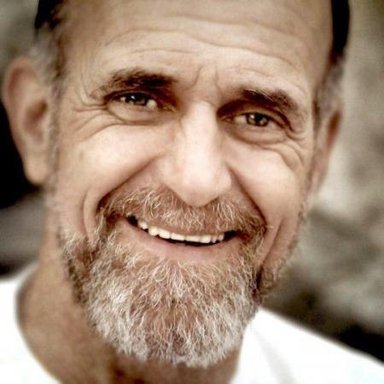
Biography:
Mestre Sabiá, born Jair Oliveira de Faria Junior, is a key figure in the world of Capoeira. He began his journey in the art in 1985 and started teaching in 1989. Mestre Sabiá is recognized for his work with children and is a pioneer in teaching Capoeira in Europe, particularly in Hamburg, Germany, where he worked with children in 1990, becoming a reference for Capoeira education for the younger generation.
In 2004, he founded the Ginga Mundo Association as part of the ONG Mandinga, which has been dedicated to promoting Capoeira and Afro-Brazilian culture through social and educational programs. He is the coordinator of the Capoeira Ginga Mundo Association, which has a global presence, promoting human rights, ethics, and socialization through Capoeira in schools and social programs. The Ginga Mundo project also hosts international events and has fostered Capoeira’s development worldwide.
Mestre Sabiá has been instrumental in organizing key events such as the “Ginga Mundo” International Capoeira and Afro-cultural Encounters and the Vadeia Mundo Vadeia World League, bringing together Capoeiristas from all over the world. His commitment to Capoeira extends beyond teaching; he has been a central figure in promoting Capoeira at international events, including the “Art’s Alive” festival in South Africa, the “Chungju World Martial Arts Festival” in South Korea, and many more across Europe, the Americas, and Africa.
In addition to his global work, Mestre Sabiá has dedicated much of his life to the preservation and development of Capoeira in Brazil. He teaches at private schools in Salvador, Bahia, and offers Capoeira classes to low-income youth in underserved communities, teaching the art in a way that emphasizes its cultural roots and philosophical principles. His contributions to the art form have been recognized globally, and he continues to influence Capoeira’s growth as both a martial art and a cultural movement.
In 2001, Mestre Sabiá had the privilege of having his work archived by the Guggenheim Museum, a testament to his impact on the cultural and artistic landscape. His work is not only that of a teacher and Capoeirista but also that of a cultural ambassador, connecting Brazil with the African diaspora through his travels and research on regional martial arts.