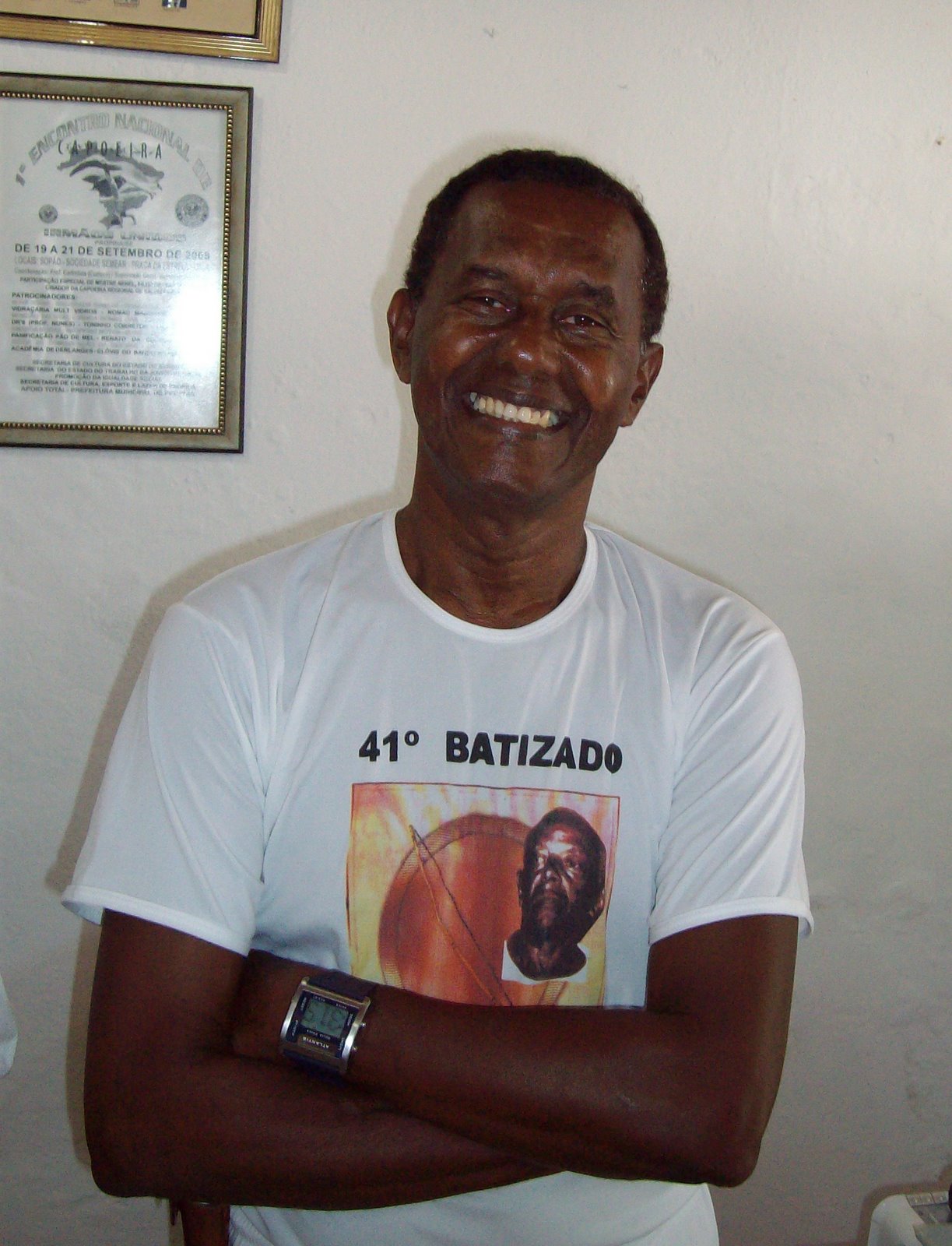
- Lives in: Salvador, Bahia, Brazil
- Date of Birth: 16-Mar-1945
- Learned from: Mestre Bimba
- Capoeira Style: Regional
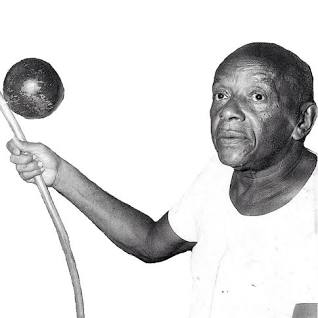
Biography:
Mestre Saci, born Josévaldo Lima de Jesus on 16 March 1945 in Santa Bárbara, Bahia, is one of the most distinguished figures of Capoeira Regional. His journey began in July 1964 when he entered the legendary academy of Mestre Bimba. Gifted with discipline and relentless dedication, he completed his formatura in 1965 and, in the same year, earned the prestigious red scarf through Bimba’s specialization course.
From early on, Saci was known as a “fominha” of training—someone who never left the roda or the mat. He developed a distinctive style marked by agility, dexterity, explosive speed, and bold combinations of movements. His jogo became famous for its fluidity and courage, and he quickly earned a reputation as one of the most talented capoeiristas of his generation.
Beyond the academy, Mestre Saci performed with notable cultural groups such as Mestre Bimba’s demonstration team, Grupo Viva Bahia, and Olodumaré. His artistic and athletic excellence took him around the world: the Salta Festival in Argentina in the 1960s, the Festival of American Folklife in Washington D.C. in 1976, and later presentations in Mexico and Canada. During this period, he was also awarded the title of Honorary Citizen of the State of Georgia, recognizing his contribution to Brazilian culture.
In 1969, he accompanied Mestre Bimba to the II Brazilian Symposium of Capoeira at the Aeronautics Military Academy in Rio de Janeiro, an event that helped consolidate the national visibility of Capoeira Regional.
In 1973, Saci founded the Associação de Capoeira Aluvião, establishing a space that solidified his role as a leader and educator. Through ACDP, he also strengthened ties with the great mestres of Bahia—Pastinha, Canjiquinha, Caiçara, Waldemar, Aristides, Itapoan, Xaréu, Geni, Decanio, and others—becoming part of the living lineage of Salvador’s capoeira heritage.
Competitively, Saci achieved a major milestone in 1975 when he became Brazilian Capoeira Champion at an event organized by the national confederation.
His vocation for teaching emerged early. In 1966, he replaced Mestre Acordeon at the prestigious Ginásio Acrópole, one of Salvador’s premier training institutions. From there, his teaching career grew—he taught at ACAL (Associação de Capoeira Arte e Luta), in military units such as the 35th Infantry Battalion (Feira de Santana), the 19th Batalhão de Caçadores in Pirajá, and within the Polícia Militar.
In the educational field, Mestre Saci served as Coordinator of Capoeira for the Department of Physical Education (SEC/Bahia). He participated in the Brazilian School Games in Vitória and Brasília, led school teams, and brought capoeira into the public education system.
Academically, Saci graduated in Physical Education from the Catholic University of Salvador (UCSAL). In 1982, he pioneered the inclusion of Capoeira as a mandatory discipline in UCSAL’s Physical Education curriculum. He has since organized annual seminars, debates, and over four decades of batizados—including the 42nd batizado in 2008, which traditionally features many of Bahia’s most respected mestres.
Adding to his broad intellectual foundation, Saci also earned a Law degree, combining his expertise as an attorney, educator, and capoeirista. This unique blend of knowledge prepared him to assume the presidency of the Federation of Capoeira of the State of Bahia, a role through which he continues to influence the development of capoeira locally and internationally.
To this day, Mestre Saci is remembered not only for his exceptional skill and pioneering achievements, but also for his lifelong dedication to teaching, preserving tradition, and elevating capoeira to new spaces—cultural, academic, sporting, and global.