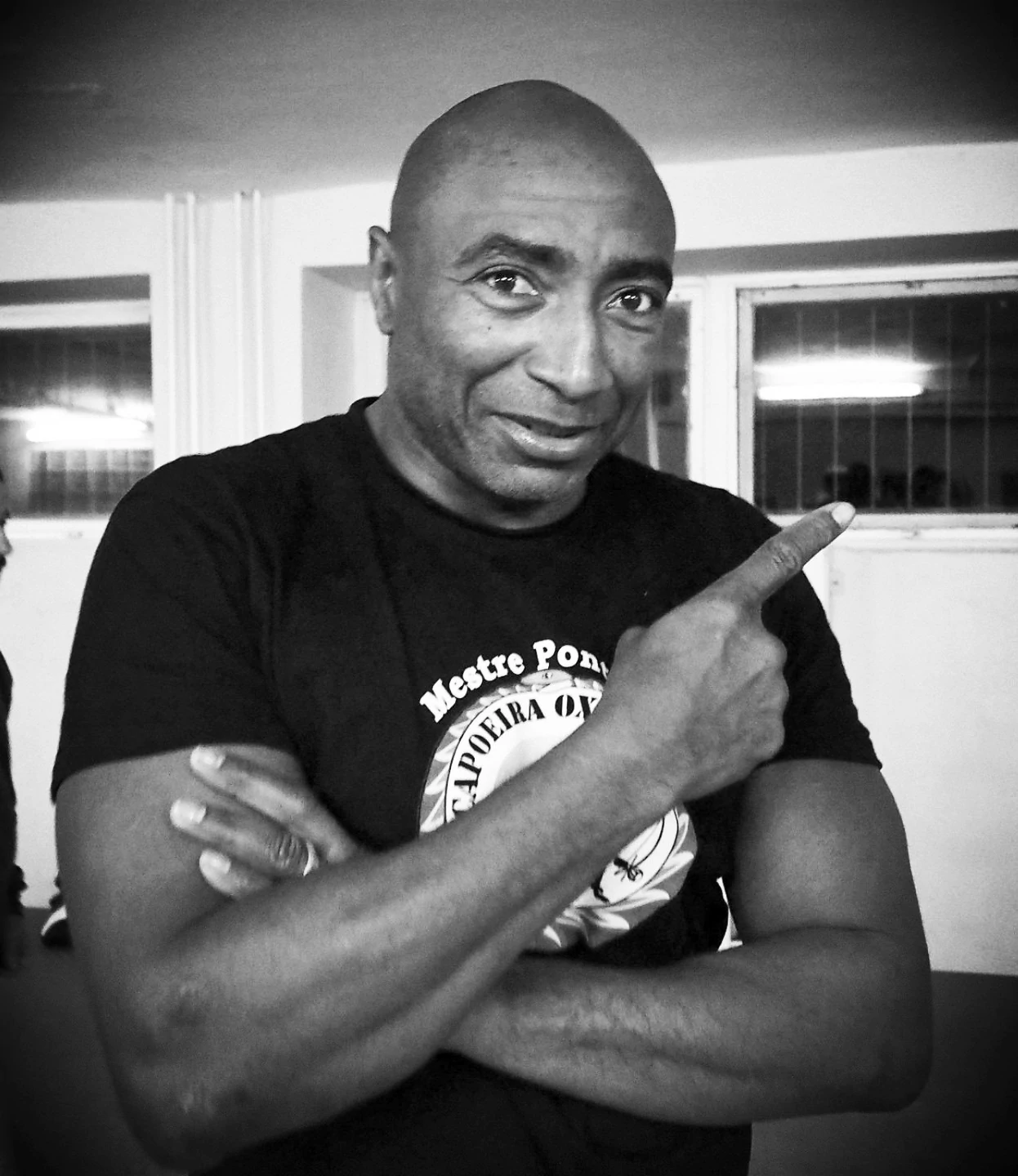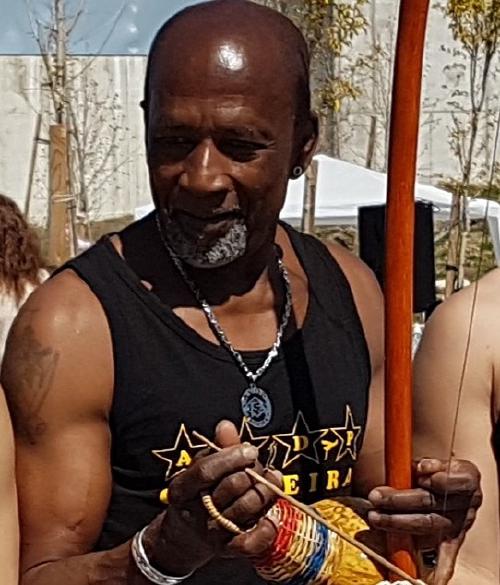
- Reside em: Rio De Janeiro, Brasil
- Aprendeu com: Mestre Poeira
- Estilo de Capoeira: Contemporânea
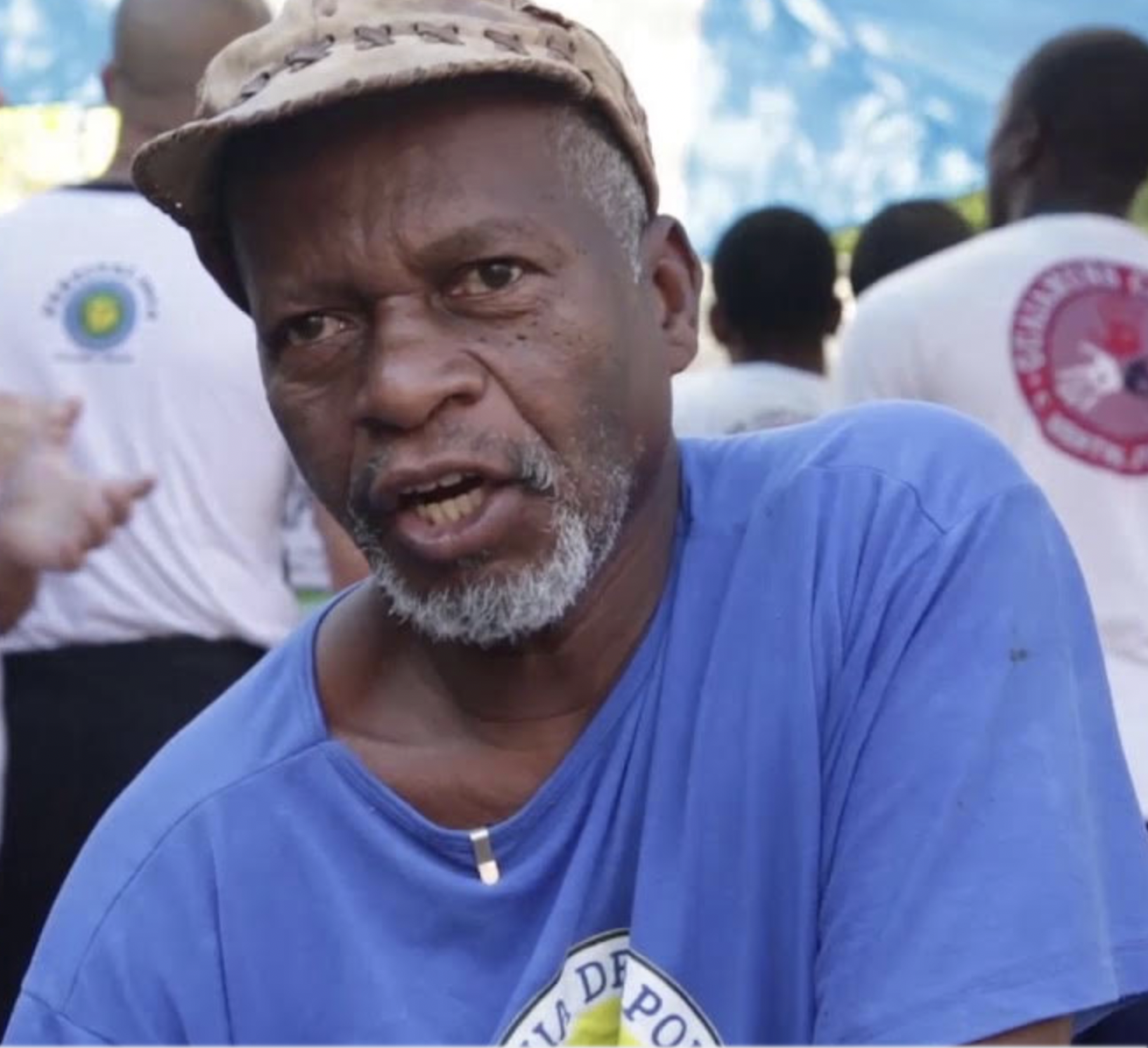
Biografia:
Carlos Alberto Moreira da Silva, known in Capoeira as Mestre Pantera, is a highly respected mestre formed in Rio de Janeiro and the founder of the Associação de Capoeira Descendente do Pantera (ACDP). Recognized for his resilience, leadership, and long-standing international teaching career, Mestre Pantera is one of the key figures linking Rio de Janeiro’s capoeira tradition with the early development of capoeira in Spain.
Early Life and Introduction to Capoeira
Born in Rio de Janeiro, Carlos Alberto Moreira da Silva began training capoeira at a young age, between 7 and 9 years old, during a difficult period of his childhood. His first contact with capoeira took place at the Ramírez Galvão School, where he trained under Mestre Tatú, originally from Brasília.
Carlos trained with great dedication, practicing daily. However, after less than a year, Mestre Tatú returned to Brasília. Soon after, one of Carlos’s sisters discovered a capoeira school in the Morro do Padre Miguel, run by Jorge Francisco Ferreira, Mestre Poeira. This encounter would prove decisive in his life.
Training under Mestre Poeira and Grupo Pantera
Carlos began training daily at Mestre Poeira’s academy, where rodas were held every Saturday and Sunday. Mestre Poeira was the founder of Grupo Pantera, a group created as a tribute to the Black Panther movement, whose ideals of resistance and dignity strongly influenced Afro-Brazilian cultural movements during the years of the military dictatorship in Brazil.
It was within this environment that Carlos received the apelido “Pantera”, a name that carried both honor and responsibility. Under Mestre Poeira’s guidance, he learned not only how to fight, but also how to play instruments, sing, respect others, observe the roda, and cultivate the ethical and cultural values of capoeira. He would later describe Mestre Poeira’s academy as the place where he truly learned the essence of capoeira.
Mestre Pantera became a mestre at the age of 21, a testament to his dedication, discipline, and ability.
Championships and the Foundation of ACDP (1973)
During this period, Rio de Janeiro hosted annual championships organized by the Federação de Capoeira de Pugilismo (linked to the Boxing Federation). Mestre Poeira strongly opposed competitions and was careful to protect the reputation of his group. Whenever conflicts arose involving his students, he would even temporarily change the group’s name to avoid negative associations.
Because Mestre Poeira did not allow his students to participate in these championships, Carlos Alberto Moreira da Silva made the decision to found his own organization. In 1973, he established the Associação de Capoeira Descendente do Pantera (ACDP), honoring his roots in Grupo Pantera while creating a formal structure that allowed participation in official events.
Through ACDP, three competitors entered the championships: Marinheiro, Falcão, and Pantera. From that point on, the association began to grow steadily.
Growth, Teaching, and Social Reach
Over the years, Mestre Pantera opened academies in several parts of Rio de Janeiro and its outskirts, later expanding to Linhares (Espírito Santo) and other Brazilian states. ACDP became known for opening the doors of capoeira to people from diverse social and economic backgrounds, welcoming children, adolescents, and adults alike.
His teaching emphasized discipline, respect, responsibility, and social awareness — values deeply rooted in his formation under Mestre Poeira.
Injury, Resilience, and Reinvention
At a later stage in his career, Mestre Pantera faced a serious physical injury that forced him to reconsider his approach to training. Rather than stepping away from capoeira, he transformed this challenge into a period of reinvention, focusing on rehabilitation, efficiency of movement, strength, and longevity.
This process reshaped his pedagogy and made him a living example of resilience, adaptability, and perseverance — qualities he consistently passed on to his students.
Expansion to Spain (1991)
In 1991, Mestre Pantera moved to Madrid, Spain, becoming one of the first capoeira instructors in the country. His presence played a fundamental role in the establishment and consolidation of capoeira in Spain, where he taught both adults and children and helped form a new generation of capoeiristas.
Among those who began their journey with him are:
-
Contramestre Camaleão
-
Formado Ponta de Faca
In 2025, Mestre Camaleão received his Mestre title, granted jointly by Mestre Pantera and Mestre Poeira, marking a historic continuation of their lineage and reinforcing the living transmission of Grupo Pantera’s values.
Legacy
Today, Mestre Pantera is recognized as a mestre whose legacy extends beyond technique. He is remembered for his strength in adversity, his commitment to teaching, and his ability to adapt and evolve without abandoning the foundations of capoeira.
Through ACDP and his decades of teaching in Brazil and Spain, he has influenced generations of capoeiristas and remains a respected reference for leadership, discipline, and transformation within the capoeira world.