MAPEAMENTO E GENEALOGIA DE MESTRES E/OU GRUPOS DE CAPOEIRA EM GOIÂNIA E REGIÃO DO ENTORNO
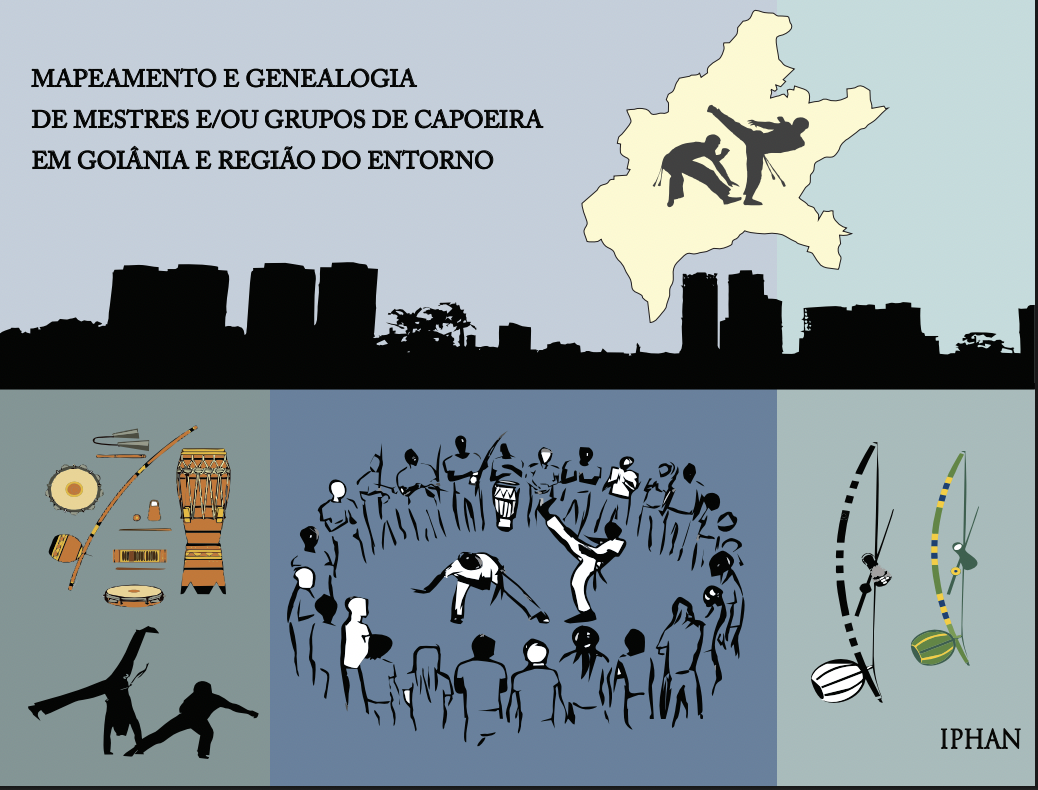
- Author: /
- Publishing Date Invalid date
- Publisher
- Cover Artist
- Link to the book
About Book
Capoeira in Goiás traces the historical roots, expansion, and contemporary significance of capoeira in Goiânia and its surrounding region. Although capoeira began spreading through Goiás in the 1960s, its lineage is deeply tied to the legacies of the two great masters who shaped the art in Brazil: Mestre Bimba, creator of Capoeira Regional, and Mestre Pastinha, guardian of Capoeira Angola.
In Goiânia, these traditions took root through two pioneering figures: Mestre Osvaldo, disciple of Bimba, and Mestre Sabú, disciple of Pastinha. Over time, capoeira in the region evolved beyond the traditional Angola/Regional divide, giving rise to a diverse and dynamic capoeira landscape.
Today, Goiânia and its metropolitan area host more than 40 capoeira groups, many of which carry decades of history in competitions, cultural initiatives, and social projects, even when lacking formal documentation. The turning point for capoeira in the city came in 1974 with the arrival of Mestre Bimba, whose presence solidified Goiânia’s prominence on the national scene and contributed to the international recognition the region now enjoys.
This book presents a comprehensive mapping of capoeira groups, using oral history, registry research, and social-media data to identify and locate each group active in the region. It also highlights three culturally significant rodas: the Feira Hippie roda, the Praça do Sol roda led by Mestre Charm, and the Setor Garavelo roda led by Mestre Kão.
A detailed genealogical study reconstructs the lineage of capoeira in Goiás, beginning with the foundational influence of Mestre Bimba and Mestre Sabú. Their teachings, transmitted through Mestres Osvaldo, Sabú, and Vermelho, gave rise to the generations of mestres active today — approximately 94 identified mestres — shaping a living and evolving cultural heritage.
By combining interviews, historical research, and contemporary fieldwork, this book offers the most complete portrait to date of how capoeira was built, transformed, and lived in Goiânia. It is an essential work for scholars, practitioners, and anyone interested in understanding the formation of one of Brazil’s most vibrant capoeira communities.