- Lives in: Salvador, Bahia, Brazil
- Date of Birth: 24-Apr-1955
- Learned from: Mestre Moraes
- Capoeira Style: Angola
Biography:
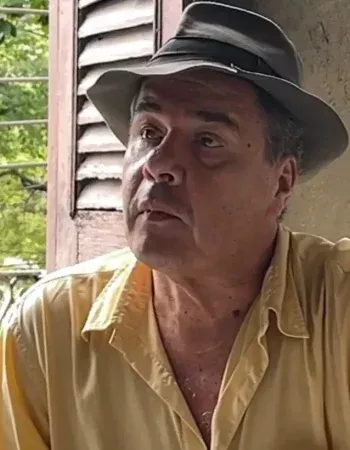
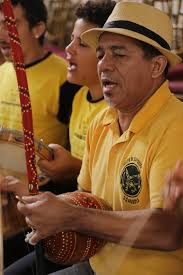
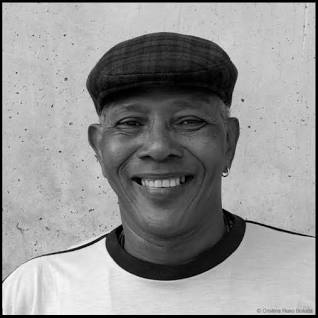
Nivaldo de Siqueira Silva, known throughout the capoeira world as Mestre Neco Pelourinho, was born on April 24, 1955, in Rio de Janeiro. A master of Capoeira Angola, cultural leader, and guardian of Afro-Brazilian heritage, he stands among the most influential figures formed in the lineage of Mestre Moraes, and indirectly, Mestre Pastinha.
His work profoundly shaped the development, preservation, and dissemination of Capoeira Angola in Rio de Janeiro, Brazil, and later across several continents.
Early Years and Formation
Mestre Neco began practicing capoeira at the age of 14, in 1969, in Rio de Janeiro. His early years coincided with a period of cultural repression in Brazil, when Afro-Brazilian traditions faced political and social pressure. Capoeira, therefore, became not only a physical practice for him but also a vehicle of identity and resistance.
In 1973, he met Mestre Moraes—apivotal moment that defined his life’s direction. Under Moraes’s guidance, Neco was introduced to the philosophical, ritualistic, and historical foundations of Capoeira Angola, the traditional form preserved by Mestre Pastinha.
In 1979, after years of intense training, he was officially graduated as angoleiro by Mestre Moraes, joining the first generation of mestres emerging from this important lineage.
Co-founding GCAP — A Movement of Cultural Resistance
In the 1970s, during a crucial moment in the revitalization of Capoeira Angola, Mestre Neco became one of the founders of the Grupo de Capoeira Angola Pelourinho (GCAP) in Rio de Janeiro—alongside mestres such as Mestre Moraes, Mestre Braga, and Mestre José Carlos.
GCAP was created amid an environment of governmental suppression of African culture. The group became a collective effort to:
-
preserve Afro-Brazilian heritage,
-
safeguard Capoeira Angola tradition,
-
unify practitioners in Rio,
-
and strengthen capoeira as a form of cultural resistance and ancestral memory.
Neco played an essential role in the group’s organization and identity, helping establish GCAP as one of the most influential Angola institutions of the late 20th century.
Founding Só Angola — Preservation and Identity
After years dedicated to GCAP, Mestre Neco founded his own school, Grupo de Capoeira Só Angola (GCASA), continuing his commitment to the ritual, movement vocabulary, music, and philosophy rooted in Pastinha’s lineage.
Through Só Angola, he emphasized:
-
traditional technique,
-
aesthetic precision,
-
cultural education,
-
Afro-Brazilian historical foundations,
-
and the ethics of the Angola ritual.
His school became one of the references for Angola practitioners in Rio de Janeiro.
International Expansion
Beginning in 2000, Mestre Neco expanded his work internationally, teaching, performing, and sharing Capoeira Angola across several countries, including:
-
Senegal
-
France
-
Denmark
-
Chile
His travels contributed significantly to the worldwide recognition of Angola as a profound Afro-Brazilian cultural practice, beyond sport or spectacle.
Recognition and Cultural Leadership
In 2014, Mestre Neco became a titular member of the Conselho de Mestres de Capoeira, linked to IPHAN (Instituto do Patrimônio Histórico e Artístico Nacional), representing the capoeira community of Rio de Janeiro.
This council is responsible for preserving capoeira as Brazilian intangible cultural heritage, and his inclusion highlighted his authority, legacy, and contributions.
Casa Só Angola — Expanding the Roots
In 2016, along with his students, Mestre Neco founded Casa Só Angola in the neighborhood of Irajá, located in Rio de Janeiro’s northern zone. This cultural space was created to further expand Capoeira Angola, offering:
-
rodas,
-
classes,
-
workshops,
-
cultural studies,
-
and community projects.
Casa Só Angola continues to serve as a living center of tradition, open to practitioners of all ages and backgrounds.
Legacy
Mestre Neco Pelourinho is remembered as:
-
a pillar of the Angola revival movement,
-
a defender of Afro-Brazilian culture,
-
a unifier of Angola mestres in Rio de Janeiro,
-
a teacher who guided generations of capoeiristas,
-
and an ambassador of Capoeira Angola across continents.
His life’s work stands as one of the fundamental contributions to the preservation and strengthening of Capoeira Angola as both an art and a cultural heritage of Brazil.